


“Change” you say?

On January 21, 2009, in Uncategorized, by The News Staff


Part 7: Drug policy

William C. Shelton

Prohibition
goes beyond the bounds of reason in that it attempts to control a man's
appetite by legislation and makes a crime out of things that are not
crimes. A prohibition law strikes a blow at the very principles upon
which our government was founded.

-Abraham Lincoln

If
you live in Somerville, you probably know of someone who has suffered
from drug abuse. Coke, meth, crack, and particularly heroin and
oxycontin use is ruining lives, stressing families, promoting crime,
destroying young peoples' futures, and occasionally, killing them. A
significant portion of assaults and murders are drug related.

Somerville
Cares About Prevention educates citizens regarding drug use and its
consequences. Our Police Department works hard to reduce drug related
crime. They do at least as well, and probably a little better, than
their colleagues in other urban areas. Yet there are always more
addicts to treat, more dealers to arrest, more funerals to attend, more
heartache to heal.

Thirty-five years ago, Richard Nixon declared
war on drugs. Since then, we've spent more on that war than in Iraq and
Afghanistan. We've made 37 million arrests for nonviolent drug crimes.
Prisons are our fastest growing industry, with 2.2 million Americans
currently locked up. We're annually making 1.9 million arrests and
spending $70 billion. Yet drugs are cheaper, more potent, and far more
available. What is to be done?

If you drive northwest on Mystic
Avenue, not far past the Medford line you'll pass a modest office
building. One of its tenants is LEAP, an organization that is
influencing opinion on drug policy across North America. Law
Enforcement Against Prohibition's members-current and retired law
officers-propose a different way. They advocate "a system of regulation
and control of production and distribution [that] will be far more
effective and ethical than one of prohibition."

LEAP member,
Terry Nelson was a federal drug enforcement officer for 30 years. He
"saw on a daily basis that we were making no difference….When you put
a drug dealer in jail, you create a job opening."

Former federal
Drug Czar Lee Brown says, "When you're in that position, you see very
quickly that you can't arrest your way out of this. You see the cycle
of people using drugs, going to prison, getting out, and getting into
drugs again."

The alternative? Brown points to a study
conducted fifteen years ago by the RAND Corporation. A team of
mathematicians calculated the most cost effective tactics in the drug
war-law enforcement, interdiction, foreign aid, treatment, and
prevention. They were surprised to find that only treatment was
effective.

But the hard evidence has no impact on drug
policies that have not just failed in their stated goals of reducing
drug addiction, crime, and juvenile drug use. Instead, the drug war
continues to worsen each of these.

LEAP member Jim Gray
describes himself as a conservative judge in a conservative
jurisdiction. Prior to joining the Orange County Superior Court, he
prosecuted what was then Los Angeles' largest ever drug case. He says
unequivocally, "We have a more radical approach [to drug law] than any
other western democracy, and we have a bigger drug problem. I'm
convinced there is a connection."

The plain truth is that drug
laws create crime. In his book Bad Trip, conservative author Joel
Miller writes, "Drug prohibition does not end drug use. It simply
forces the consumer to break the law to get what he wants."

Add
to that addicts who steal to support their habit and drug bosses who
kill to dominate their territory. Peter Christ, a LEAP member and
retired Buffalo PD captain observes, "We legalized alcohol because it
only took us 13 years to learn the lesson that alcohol did not create
Al Capone. Prohibition created Al Capone. And everyone didn't become a
drunk in 1934."

He's right. With alcohol prohibition, murder
went up 13% and robbery, 83%. Prohibition ended in 1933, and violent
crimes returned to their pre-prohibition levels by 1937. Judge Gray
estimates that 80 percent of felonies are drug related.

One of
the drug war's hypocrisies is that its purpose is to prevent harm to
users. While drug addicts do serious damage to their lives, the drug
war destroys those lives.

Jay Fleming, a thoughtful LEAP
member, served 15 years with multiple drug enforcement agencies: "As
with all wars, you have to have an enemy. That enemy turns out to be
our fellow citizens. Once you make the enemy evil, its ok to use any
means to destroy them." He relates how, working undercover, he got to
know drug culture people and their families. "And then you have to come
back and destroy that family."

The number of Americans behind
bars for drug offenses, mostly nonviolent, has increased by 1,200
percent since 1980. Legendary NYPD crusader Frank Serpico describes the
prison system as an industry. "They run it like real estate. They have
so many rooms, they have to rent them out, and the police fill them."
Former drug cop, then coroner, then mayor of Vancouver Larry Campbel
says that the drug war isn't really a war, it's a business.

Imprisonment
and a criminal record is not the only damage prohibition does to
addicts' lives. Joel Miller writes, "People who fall into a drug habit
and do not want to harm others by stealing, instead harm themselves by
whoring."

Fleming's remorse suggests another drug war impact.
Former Seattle Police Chief and LEAP member Norm Stamper says,
"Narcotic enforcement puts cops in an untenable situation. They are
enforcing laws that in many cases they don't believe in." Then there
are lucrative temptations to corruption. The few cops who yield, damage
the morale of and public respect for the many who don't.

Nor
is corruption limited to law enforcement officers. LEAP member Cellie
Castillo was a DEA agent interdicting Latin American drug traffic. He
discovered that U.S. officials were sending flights of cocaine to the
U.S., buying weapons with the proceeds, and sending the weapons on
return flights to Nicaraguan Contras who used them to commit
atrocities. His reports were ignored.

And of course the
Taliban, al-Qaida, and terrorists in Colombia, Peru, and Pakistan can
finance their operations through drug trafficking because drug use is
criminalized in the U.S.

LEAP's solution is to legalize,
regulate, and heavily tax drugs. Then as Judge Gray suggests, "Hold
people accountable for what they do instead of what they put in their
bodies."

A portion of the enormous revenues and reduced costs
thus generated could be put into drug treatment. The RAND study found
that 13 percent of addicts who went through treatment stopped using
permanently. That seems minimal until you realize that no other tactic
has produced any reduction at all. And treatment programs have become
more effective since the study.

This is not a matter of
morality. Enforcement causes more misery than it prevents. It's not a
matter of ideology. George Will, Howard Zinn, William F. Buckley, Noam
Chomsky, Milton Friedman, and George Shultz have all agreed with the
policies that LEAP advocates. It's a matter of hard evidence, honesty,
and courage.

Nixon was right to call drug abuse an epidemic,
but he was wrong to make "war" on its victims. Over my lifetime, a half
dozen people whom I have known died from overdoses or bad drugs. At
least that many got caught in prison/addiction cycle. One was shot to
death in a transaction. Judge Gray says that, "Eventually we will come
to our senses." I hope so.


Capuano Provisions Included in TARP Reform and Accountability Act

On January 21, 2009, in Uncategorized, by The News Staff

Measure Scheduled for Consideration Today
From
Congressman Capuano's Office: Today the House is expected to pass H.R.
384: TARP Reform and Accountability Act. This legislation amends the
Troubled Asset Relief Program (TARP) established as part of the
Emergency Economic Stabilization Act of 2008. The measure is designed
to increase accountability and transparency over the use of the
designated funds as well as provide more relief for homeowners facing
foreclosure.

Congressman Mike Capuano proposed a number of
provisions to H.R. 384 which is expected for floor consideration later
this afternoon. Specifically, language was added clarifying that one to
four unit family homes are included in the definition of "residential
properties", making them eligible for participation in the foreclosure
mitigation program. Renters also receive some protection with the
inclusion of a measure that prevents any entity taking over a
foreclosed home from evicting tenants for 90 days.

"This gives
renters facing the loss of their residence through no fault of their
own some additional time to find alternative arrangements," stated
Congressman Capuano.

Language changing the membership of the
Financial Stability Oversight Board to include members who are not
currently federal employees or appointees was included as well as
language giving this Board the authority to overturn policy decisions
of the Treasury Secretary on TARP by a 2/3 vote.

"This will give
the Oversight Board more autonomy when it comes to overseeing the TARP
Program and provide an additional layer of assurance that taxpayer
funds are being spent wisely," stated Congressman Mike Capuano, a
member of the House Financial Services Committee.

Additional
language would set a floor of at least 15% for warrant provisions for
all institutions receiving TARP funds, which sets an even playing field
regardless of an institution's size. A "warrant" ensures that the
federal government is able to buy stock in a company at a specified
price so that taxpayers will benefit from any future growth of these
companies.

Congressman Capuano also worked with his colleagues
to include language for strict rules on compensating executives of TARP
recipient institutions, including prohibiting golden parachutes,
curbing the reward of risky behavior, and allowing the recovery of
bonuses based on false earnings. These measures were also applied
earlier to automakers receiving government funds. In addition, language
was added prohibiting recipient institutions to merge unless federal
regulators determined it would reduce risk to taxpayers or that the
merger could have occurred without the use of TARP funds.

"The
amount of money that the government has invested in the TARP program is
substantial and our overall goal of unfreezing the credit market and
stabilizing the economy must be realized. If entities receiving these
funds are using them in ways that do not directly provide economic
relief, they should not be able to continue using the funds. Now that
the Senate has voted to allow the use of the second $350 billion, it is
more important than ever to place conditions on its use," stated
Congressman Capuano.

H.R. 384 will move to the Senate for consideration once it passes in the House.


A lesson from Sully

On January 21, 2009, in Uncategorized, by The News Staff


Jimmy Del Ponte
On The Silly Side

A
courageous and calm acting airline pilot ("Sully") safely lands his
troubled airbus full of people on The Hudson River. Now that was some
commendable maneuvering. To be able to remain level headed and avoid
bridges and buildings while keeping the plane steady, and the
passengers calm, was a true act of skill under duress. Everyone was
cold, but alive and safe. So why can't people drive a simple automobile
safely and courteously on the roads of this city?

Why can't we
go from point A to point B without pointing (and flipping) fingers? How
many times have you lost your vehicular focus while in the midst of an
expletive-fueled exchange with another driver? Much like Sully, though
on a much smaller scale, we have precious children to deliver to
school, yet we drive like Evel Knievel (who by the way, is deceased). I
remind myself to keep calm at all times.

One of my pet peeves
has always been driving in Somerville. Every time I strap myself into
my vehicle, it's on. I'm in the Highland Derby. It's every man for
himself in the war of the roads. Trying to get your kid from Central
Street (their Mom's house) to the West Somerville Neighborhood School
by 8:16 am is nerve wracking to say the least. It's an ever changing
experience that holds new and terrifying twists and turns each day.
Again, I utter: "calm it down, pally…" to myself.

The initial
ritual for the mad morning rush is the coffee stop – the fuel for the
fuel-ish. Here is my experience. I say "large black decaf" and they say
"sugar?" and then I say "no…large black decaf" and they say "cream?"
and I say "no…large black decaf" and they say "milk?" At that point I
say "nevermind" and proceed to just lick the condensation on the inside
of my windows, instead of trying to convey my order anymore. By now I
am livid – and I try to suck a little of the frozen water out of the
plastic bottle that has been there in the vehicle all night. For the
record, the decaf hasn't been helping me keep calm. I finally got hip
and started making my own java in the morning – once more I say to
myself, take it down a notch nut case.

The fun starts with
trying to get the kids out of bed – both boys have to put their contact
lenses in first. I said first – which means the other kid can't be in
the way. I won't bore you with the rest of the routine, because you
probably know how it goes: "where's my sweatshirt?" "where's my shoes?"
"where's my back pack?" (where's Daddy's medication?) Then I hear
something along the lines of "I wanted milk, not orange juice!" You
know that if I had yelled upstairs to ask "milk or OJ", then I become
the first person of the morning who raised his voice – and then it's on
– Daddy is in a bad mood!

At some point every morning, I hear
the words that all parents cringe at: "I still didn't finish my
homework…" Steam then comes out of my ears and no dose of blood
pressure medicine will help. And to make matters worse, here comes that
other daily pain in the ass word: "shotgun!" followed by a minute of
"you had it yesterday" and "but I called it first." I know why they
call it shotgun, because you think about getting one as the squabble
escalates. To make matters worse, my truck is guzzling gas in the
driveway as it keeps warm for the squawking siblings. Count to
10…What would Sully do?

Now it's finally traffic time. Don't
you love those geniuses who scrape only a 4 inch by 3 inch rectangular
spot through their snow and ice covered windshield? Who are these
morons? It's like they are driving a Sherman Tank. They can't see
behind them or to their sides because they were in such a panic to
bring their mayhem to rush hour, they had only one minute to clear off
their car. They couldn't go the extra 10 minutes and finish cleaning
their vehicle? I particularly enjoy when I am behind these jug heads
when the 2 foot by 2 foot wall of snow blows off their crap box and
completely covers my windshield. Thank you for endangering my family!

So
the kids are in the truck, and we're off to the races. The stop signs
and flashing red lights mean nothing to drivers – if anything, they
mean "slow down only a little, glance briefly and then floor it…"
Then it's cat and mouse. Is he letting me go? Should I boot it and cut
him off? If I stop for this guy, I'll be here for an hour. Damn, so
many choices, so little time. I knew I shouldn't have hit the Rotary, I
could have gone through Teele Square. And if you do let someone go in
front of you, like the 3-piece suited guy with too much gel in his hair
who is on the cell phone, don't expect a "thank you." Gordon Gecko is
too busy making deals on the phone to thank the little people.

I
become the biggest idiot at the rotary because I have evolved into a
serious defensive competitor. Sorry, but no one is cutting me off
(unless it's Tim Mitsatkis, Mikey Deveraux, Joe McCain or Bill Nolan –
or some other cop ). I stop at my stop sign, then I'm off like a (fill
in the blank – e-mail me with the phrase you think I wanted to put
there).

And let me tell you, if you think I'm not going fast
enough up Powder House Boulevard and you're on my tail, I will only go
slower! Count to 15…think like Sully.

Even at Christmas there
was nothing but hatred and competition on the road. And I believe some
people's cell phones are glued to their ear and their arm is stuck that
way. What, do you have the 20,000 any-time minute plan? Hang it up! In
the old days, we just waited for a call from the school nurse or
principal to discover that Bobby got stuck with a pencil or Billy threw
up on the teacher's desk. We all have to chill out.

I usually
spend the entire ride to school reading another chapter of the riot act
to my kids. Today's lesson was: "don't use that tone with me – I'm your
father and you will respect me…" Yesterday's was: "if you mumble
under your breath at me again, I am locking the Play Station 3 in my
closet…" So as you can see, parenting, along with competition
driving, goes hand in hand. Count to 20…be like Sully.

I can't
wait for them to experience the bus – you are not a true Somerville kid
until you have frozen your cheeks off waiting for the bus to school.

My
kids are young and I am old. I am a 55 year old dyed-in-the-wool
Somerville kid. I will be out there driving them around for quite some
time to come. I love my city passionately, but I hate you when you are
on the road. I also hate you drivers from surrounding cities and towns
who wreak vehicular havoc also. I hate you especially when you are at
the rotary. And to you lazy drivers – and you know who you are – clean
the whole car off for God's sake. Get up earlier, buy some gloves, get
a scraper, and become a member of the human race. And let's all try to
calm down – especially at the rotary – because I follow the rules and I
am definitely going to win. I have had 38 years experience at it. And
to all you other seasoned Somerville drivers like me – we should get
some kind of special flashing beacon (or finger) on top of our vehicles
so we can recognize each other, and be extra courteous to our peeps.

What would have happened if that hero pilot "Sully" lost his cool and drove like the nuts we share the road with in the morning?

By
the way, I had a friend named Sully (or Fitzie or Obie) who once saved
a 16 ounce can of Budweiser from rolling off the rocks at Powder House
Park! Ok, not the same, but a little bit relatable, no?


You can email Jimmy directly at jimmydel@rcn.com.


FAFSA event opens doors to students

On January 21, 2009, in Community/Arts, by The News Staff
 

By Cathleen Twardzik

On Sunday, January 25, 2009, beginning at 2 p.m. for approximately two hours, hundreds of volunteer financial aid professionals will help Massachusetts students and their families to fill out a Free Application for Federal Student Aid (FAFSA), in a one-on-one environment, at the Massachusetts College Goal Sunday, according to a press release.

The cafeteria at Somerville High School is one of 22 sites, statewide, which will provide assistance to students on Sunday. By the conclusion of the free event, each student will possess an entirely finished FAFSA.

Last year 81 families participated, "which means mostly students brought at least one parent. It was the first year that we held College Goal Sunday in Somerville," said Melissa McWhinney, Advocacy Director, Community Action Agency of Somerville (CAAS). This year, McWhinney expects an even larger number of participants. "We're hoping we can serve more people," she said.

"This year [College Goal Sunday] is being coordinated by the guidance department for the Somerville School Department. Carolyn Richards, the head of guidance for the Somerville Schools, is the lead coordinator.

The first step to a student receiving federal financial aid for college is to fill out a FAFSA. However, if he or she overlooks that component, his or her chance of federal money will vanish.

It is important to note that the majority of colleges in most states, utilize each enrollee's FAFSA information to present him or her with an awards package. School-based aid may be used in tandem with federal financial aid.

The initial reason why College Day Sunday started in Somerville proves quite interesting.

"There was a former member of our teen peer leader group, and he asked me if I could help him with the FAFSA," said McWhinney. "I helped him in 2007. Then, I learned about the College Goal Sunday program. We it brought in because I said, 'If this one child is having trouble, then, I'm sure others are, as well."

The aim of College Goal Sunday is to increase the quality and quantity of FAFSA applications which are filed in Massachusetts, as well as the amount of financial aid, which is provided to students in Massachusetts. Another of the program's goals is to eliminate the information gap, regarding the availability of financial aid for college applicants.

Are you planning to attend this event? If so, it is of utmost importance to provide as many of the following official documents and records as possible: your FAFSA PIN, your 2008 Federal Tax Return or other income documentation, as well as your parents financial information, social security number, driver's license — if applicable, 2008 W-2 Forms or year-end pay stubs, additional year-end records of money received, 2008 untaxed income records, such as: Social Security, Temporary Assistance for Needy Families, welfare, or veteran benefits records, 2008 bank statements, 2008 business and investment mortgage information, and alien registration card — if applicable. In addition, bring investment records, such as those proving ownership of a business, farm, stock or bond.

Translators will be available at many of the participating sites to assist any individual, for whom English is not his or her native language.

If your 2008 information is not available, then your 2007 information would be useful.

For more information about Massachusetts College Goal Sunday visit www.fafsaday.org, or call (877) 4-CGS-MAS


Let the adult evening school begin

On January 21, 2009, in Community/Arts, by The News Staff
 
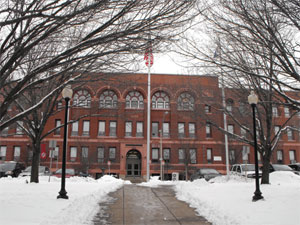
Somerville High School, the home of the Adult Evening School. ~Photo by Bobbie Toner

By Cathleen Twardzik

The winter 2009 session of the Somerville Adult Evening School will begin on Tuesday, January 20th at Somerville High School – the Thursday classes will commence on January 22nd.

This semester, the Adult Evening School will offer a total of 36 courses. "[Each year], we try to grow the program. We've added a lot of classes in the past two years," said Mike Ciampa, Adult Evening School Principal.

Courses cover a wide range of subjects, some of which are academic in nature, but most are taken or solely for enrichment. The goal of the courses at the evening school is to provide members of the community with low-cost classes about topics which they would enjoy, according to Ciampa.

"We're offering some academic classes to high school age students who need high school credit. There's Math, Science, English, and Social Studies," said Ciampa. In addition, this semester Biology will be added to the mix.

Monetarily, "Classes vary," said Ciampa. Courses cost $150, on average, although, various classes require additional materials, at an extra cost. Conversely, courses shorter in duration cost less.

"We're also offering some courses that offer certifications. We have courses that offer the 10 hour Safety Certification. We have First Aid and CPR. We're offering Driver's Ed right now – that's a little bit more expensive. That certification will go towards your insurance," said Ciampa. In addition, a real estate certification course is available. After having completed that course, individuals may take the real estate salesperson license exam.

Introductory computer and internet courses are available, and are intended for senior citizens.

Interestingly, the bulk of the program is enrichment for adults. Of the 36 course offerings, 30 of them are non-academic. Graphic Arts, Web Design, and African drumming, are among classes offered "straight for enrichment." Furniture Making and Culinary Arts have proven extremely popular recently.

Many people enjoy courses at the Adult Evening School in a social sense, according to Ciampa.

Ciampa is considering offering "one day type classes" that may pique local interest. Possible topics may include the history of Somerville and the history of sports.

Members of the community may contact Mike Ciampa with any ideas for new courses at, somervilleeveningschool@somerville.mec.edu or (617) 625-6600 x6159.

"I'd love to have things like quilting and scrapbooking and other arts and crafts type things, as well," said Ciampa. "I think that people would sign up for them. I think our cost is reasonable, and we have a great facility here at Somerville High School."


Rock, paper, scissors rocks Union Square

On January 21, 2009, in Community/Arts, by The News Staff
 
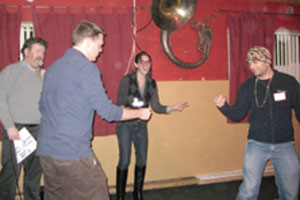
A lively competition of people from the area kept spectators "in the game." Here, two people go at it in their quest to be the winner of the competition. ~Photo by Alysson Pitts
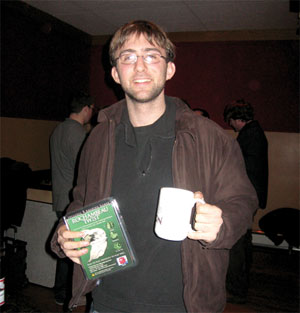
David Shark, a BU student, was the winner of the Rock, Paper, Scissors competition. Here he holds his prizes after beating out several other competitors. ~Photo by Jason Kean

By Vladimir Lewis

The first annual Rock, Paper, Scissors competition, part of Second Wednesdays, brought fierce but friendly competitors from all parts to P.A.'s Lounge in Somerville last Wednesday, January 14th.

About 60 competitors with names like "Fingas", "Rock Fist Always" and "Yes We Can" squared off in several preliminary rounds and then a finals bracket determined the winner.

"The idea of Second Wednesdays is to promote an event once a month to promote Union Square businesses, and bring people here who might not otherwise come here," said Jason Kean, 30 , of Somerville, who led the team of volunteers running the event.

MC Gerry Green entertained the rowdy but well behaved group with jokes and banter – a good time was had by all.

The winner, when all was said and done, was David Shark,19, a BU student.

When asked about any winning strategies he used, Shark said, "No real strategy up until the final. But in the final I went with rock on every hand except the last. I figured my opponent would think I would go with that, but I went with scissors and won it all with that."

"Shark" as he called himself won 127 dollars and a mug sporting a graphic of a rock, paper, and scissors.

Local businesses pitched in some goodies, so several present won raffle prizes.

Nate "Papelcut" Taneja, 28, of Somerville, was the runner up after a long lasting fight with "Shark." Taneja sported a necklace with scissors hanging from it. One crowd member shouted Taneja would never throw scissors.

"Jason and his team did great work," said Mimi "Lady Clipper" Graney, director of Union Square Main Streets. When asked about her personal approach, Graney joked, "The pace was just too fast, rock and scissors flowing everywhere. I wanted it all to slow down so I could plan out a strategy."

Other competitors in the best of five rounds included "Rock Star", "The Interminable Squid", "Nimble Fingers", "Rubble" and "Fist of Death."

Scott Loring,48, of Somerville, said 3 papers in a row is called the bureaucrat while 3 rocks in a row is called the avalanche.

"I'm a mediator professionally, so we use this sometimes. It's a non-violent way of solving things going back to ancient times," he joked.

The longest, most dramatic match featured "Papelcut", the eventual runner up, coming back from a 0-2 deficit to tie and, after at least ten draws on the deciding hand, he defeated Dan "Iron Fist" Brown.

Brown, 22, of Brockton said, "I saw this on YouTube. It looked pretty ridiculous, but I wanted to give it a try before I knocked it. And maybe it would be an easy way to win money."

James, 32, of Davis Square, called himself "Dax." "My friends do this all the time to settle who goes first in golf, basketball and all, but this is my first formal competition. I realize its mainly left to chance, but I'm hoping to psych out my first opponent with a Jedi mind trick."

Kean said next month's Second Wednesday, which may change its name to "Community Fun Time," will probably feature a puppy love and Valentines Day theme and focus on pet stores and local animal shelters and be involved with "Dogma," a Union Square pet care business. Proceeds will likely go to support the local dog park.


Barack Obama is our 44th President

On January 21, 2009, in Uncategorized, by The News Staff

In front of a record crowd, speech sends message of hope in a troubled time
Barack
Hussein Obama became our 44th President on Tuesday, before a crowd of
two million people from all over the country, and the world. Those who
weren't there, watched on any channel that was broadcasting – and what
they saw was a nation that began celebrating the minute then
President-Elect Obama and his wife stepped out the doors of Blair House.

From
there, it was a dizzying spectacle of carefully organized window
dressing, with the swearing in ceremony and speech thrown in for good
measure.

President Obama's speech was deliberately somber, in an
attempt to lower expectations, while at the same time, energize a
nation to stand up together and move forward. "Starting today, we must
pick ourselves up, dust ourselves off, and begin again the work of
remaking America," he said.

The speech ended on a positive note:
"America, in the face of our common dangers, in this winter of our
hardship, let us remember these timeless words. With hope and virtue,
let us brave once more the icy currents, and endure what storms may
come. Let it be said by our children's children that when we were
tested we refused to let this journey end, that we did not turn back
nor did we falter; and with eyes fixed on the horizon and God's grace
upon us, we carried forth that great gift of freedom and delivered it
safely to future generations."


At MLK Celebration, A Look to the Past and a Vision for the Future

On January 21, 2009, in Uncategorized, by The News Staff

Somerville's Martin Luther King, Jr. Celebration

Keith Cheveralls

Somerville
– neither the chore of shoveling Sunday night's snow, nor the pleasure
of a crisp winter morning, kept those in the audience of Somerville's
annual celebration of Martin Luther King Day from taking the time to
remember Dr. King and his accomplishments this past Monday.

The
event, sponsored by the City of Somerville, the Somerville Public
Schools, the Early Childhood Advisory Council and Somerville's Human
Rights Commission, and hosted by the co-chairs of that latter
organization, Ify Mora and Barry Rafkind – focused this year upon Dr.
King's "legacy of community service." Through speeches, a choral
performance, a dance routine and the presentation of awards to those
who have "excelled in community service," the event was a
"celebration," as well as a "remembrance and a tribute," in the opening
words of Walter Pero, president of Somerville's Board of Aldermen.

The
audience was chatty but patient as organizers waited for snow-delayed
stragglers, and then rapidly fell silent with the screening of an
introductory clip in grainy black-and-white of Dr. King delivering his
famous "I have a dream" speech. While the clip set a tone of somber
reflection – Dr. King's voice seems never to lose its spine-tingling
power – the imminence of Tuesday's inauguration of President-Elect
Barack Obama infused the atmosphere with a sense of hope and optimism.

Nearly
all of the speakers made reference to Obama's election, and many spoke
of his inauguration as emblematic of the progress made by the civil
rights movement Dr. King once led. "Rose sat for Martin to walk; Martin
walked for Obama to run," student speaker Rahel Ghebermichael said in
her speech, quoting, in fact, a poster hanging in the hallway outside
the auditorium. The audience responded with spontaneous shouts of
approval and applause.

In his keynote address, Ron Marlow,
Assistant Secretary of Access and Opportunity in Deval Patrick's
administration, began by recollecting a childhood lived under the
racial tension of Boston in the 1970s before waxing philosophical.
Quoting a Martin Luther King line that, he joked, no one else had yet
used, Marlow read that "although the arc of history is long, it bends
towards justice."

"I disagree," Marlow said. "It only bends when
individuals like yourselves are willing to tilt it in that direction,"
when "thousands who see a wrong correct it." "On the day before the
inauguration when we swear in a president who ran with a fierce
urgency, let that urgency motivate you to affect those around you,"
Marlow concluded, to applause.

But even as he echoed the other
speakers by emphasizing the symbolism with which Obama's inauguration
is laden, Marlow cautioned against complacency in the face of
persistent racial tension. "In the euphoria of the election, this
notion of being 'post-racial' gives pause to many invested in civil
rights," Marlow said in response to an audience question about how to
document past civil rights struggles in the face of Obama's success.

"Clearly
November was a momentous occasion," he said, but reminded the audience
that only a few weeks ago, an unarmed black man – 22-year-old Oscar
Grant – was shot in the back, allegedly by a California transit police
officer. Noting the tension between remembering past suffering and
focusing energy on the future, he opined that "we must never lose sight
of history, but we won't allow it to remain a shackle."

Two
awards were presented by the Somerville Human Rights Commission. The
first, for an organization "upholding Martin Luther King's values,"
explained Mora-went to the Jonathon M. Tisch College of Citizenship and
Public Service Scholars Program. Nancy Wilson, Associate Dean of the
college, accepted the award on behalf of the college.

She
praised the role Somerville's community plays in the college's
community service. "Somerville is a great partner for our faculty" and
the community is vital to "holding us to task" and prompting
reflection, she said.

The second award, this time for an
individual leader in community service, went to Dora Tevan, founder of
the Ethnic Arts Center of Somerville. For over thirty years, explained
Mora, Tevan has been designing cultural programs and fostering
intercultural understanding.

"I knew that I wanted to bring
cultures alive through an anthropological approach, so that one can
have pride in one's own culture and appreciate other cultures," Tevan
said in explaining why she started the center. She closed with a
poignant look back across the past thirty years. "When I first started,
little black children and little white children didn't want to look at
each other. Things really have changed."

The remarks of both
speakers and awardees were punctuated by both song and dance. The St.
James Episcopal Choir, under the direction of Pat Michaels, performed
three pieces, including "We Shall Overcome," in the performance of
which the audience was invited to join. The Indo-Pak Dance group,
counting three Somerville High School students and one
audience-charming eight-year-old among its members, performed to an
audio montage of Indian and Pakistani pop and dance songs.

In
her closing remarks, Mora interwove, one more time, the legacy of King
with the promise of Obama. "Some think it's a coincidence that we
celebrate Martin Luther King on the eve of Obama's inauguration," she
said, before drawing parallels between the civil rights movement that
King led and the political movement that grew around Obama's
presidential campaign.

In these movements, she implied, lies the power to confront future problems.

"As
we face a worsening economy and growing challenges in our communities,
we must keep the spirit of 'yes, we can' in our hearts."


Somerville’s first community arts center at the final stretch

On January 21, 2009, in Uncategorized, by The News Staff

Preliminary schedule is released

By Julia Fairclough

Pretty
soon, Somerville will feature a new arts corridor, running the length
of the bustling Highland Avenue, that will connect the culturally
vibrant Union and Davis Squares. The catalyst for this cultural and
economic boom will be the city's first community arts center, the Arts
at the Armory.

Residents and visitors will see Somerville as an
arts destination, with a full roster of dance, theater and visual arts,
Debra McLaughlin explained as she gave a quick tour of Armory building
at 191 Highland Ave. A 7,000-square-foot performance space, a tidy art
gallery space featuring exposed brick and soft light filtering into the
windows and an airy cafe that will seat 50 were just a few of the
highlights.

"It's been a massive project with a lot of moving parts," said McLaughlin, the chair of the board of directors.

The
final piece of the puzzle will fall into place once the center obtains
an entertainment license. The license hearing will take place Monday,
Jan. 26 at 6 p.m. at the Somerville Senior Center, 167 Holland Avenue.
McLaughlin encourages people to attend the meeting to learn about the
Armory's mission and to ask questions.

A benefit concert
featuring nationally known musicians will also be held at the
Somerville Theater on Jan. 24, at 8 p.m. Comedian Jimmy Tingle and
local "legends" Mission of Burma and The Neighborhoods, as well as
newcomers Faces on Film will lead the performance. Visit
http://www.artsatthearmory.com for more information.

With the
granting of the license, the center can officially open the cafe and
performance hall. The actors for the center's first performance,
Coriolanus, can start rehearsing.

While great community
centers exist in other parts of the region, the Armory is one of the
largest-boasting 34,000 square feet-to afford a great variety of
cultural activities, McLaughlin said. The performance hall, which seats
395 people, will offer theater, dance and music productions. The four
first-floor gallery spaces will allow visual artists to show their
work. There's also plenty of room for after-school programs and adult
art classes.

The Armory staff will unveil the programs in
stages. The first priority is getting the hall opened, McLaughlin said.
The second will be creating after school and summer arts programs for
elementary, middle and high school students. The Armory will pilot a
February school vacation arts program. (Visit
http://www.artsatthearmory.com for upcoming information).

The
Armory hopes to offer a summer institute for teenagers called Be SmART.
They will offer tracks in photography, film, music and "art
entrepreneurs," to show young people that careers in art exist. Staff
is putting the faculty together. Armory staff have also talked to the
Somerville public schools about other possibilities, McLaughlin said.

The
Armory also applied for funding to act as an economic development
catalyst in the cultural sector to work with local partners, including
local artists, the Somerville Museum, Vernon Street Studios, and
restaurants. Together, they can promote Highland Avenue as an arts
destination.

"Davis and Union Squares are recognized for their
artistic endeavors," McLaughlin said. "We are right in the middle.
We're trying to see what we can do to be a good neighbor, literally, as
well as economically and culturally."

Once the Armory is up
and running in full gear-by this summer or fall-it will also foster an
active volunteer community. They will need ushers for its performances,
gallery assistants, open studio staff and box office assistants, among
others.

The center will also put together an advisory board
comprised of three neighbors, a representative from the Somerville Arts
Council, the Armory, and an Alderman to address ongoing issues, which
include compliance with the 41 conditions (governing various issues
around hours, noise, etc), McLaughlin said.

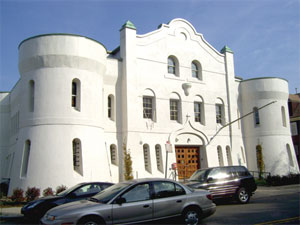
The Armory,
designed by Boston architect George A. Moore, was constructed in 1903
for the Somerville Light Infantry of the Massachusetts Volunteer
Militia. Over the years, the National Guard and the State Police
occupied the space. In April 2004, Joseph and Nabil Sater, owners of
the Middle East club in Central Square bought the decaying property
from the state for $2.6 million.


Restaurant controversy brings out opposing views on late-night hours

On January 21, 2009, in Uncategorized, by The News Staff


Golden Light hearing to be held tonight

By Tom Nash

The
controversy sparked by a Davis Square restaurant's continuing violation
of its allowed operating hours has stirred up starkly different views
on how the laws are either protecting or stifling the city's character.

In
a preview of tonight's public hearing on the operating hours of College
Avenue's Golden Light Restaurant, residents showed up at last
Wednesday's Board of Aldermen Licenses and Permits Committee meeting to
make their case for and against allowing restaurants to extend their
hours until 2 a.m.

"For ten years I went through hell," resident
Jim Campano said of living near an establishment that stayed open until
5 a.m. "Nothing good happens after 12 midnight."

Brendan Kearney
was among a handful of Golden Light supporters who showed up to make
the case for owner Bruce Lam, who came with a second petition asking
for the restaurant's hours to be extended.

The Board of Aldermen
first singled out the Golden Light Restaurant's reputation for staying
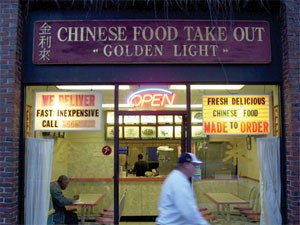
open the latest in town in October. The Chinese takeout place had
bragged about being open the latest in Somerville for 26 years.

When
the issue was brought up at a Board of Alderman meeting last October,
Ward 6 Alderman Rebekah Gewirtz defended the establishment, saying its
operating hours have not been an issue for her constituents – including
Ciampa Manor, a senior center across the street from the restaurant.

"I
have not gotten any complaints," Gewirtz said. "I have a petition here
from Bruce [Lam] and every signature going onto the third page is 27
College Ave (Ciampa Manor). I just want to be clear that it is not my
sense that this is a raging issue in the community."

The Golden
Light's license had allowed it to stay open until midnight on weekdays
and 1 a.m. on Saturdays, while it is reported to have regularly stayed
open until 3 a.m. throughout the week.

In defending the
restaurant's request for extended hours, Kearney said having food
options like the Golden Light in Davis Square makes life easier for
residents who would otherwise have to seek out late-night food in
Boston.

"I want Somerville to be the location where I want to go
out and where I want to live," Kearney said. "I don't want to have to
go to Boston and spend $20 on a cab both ways. I'd rather walk to Davis
Square.

"Especially the way the economy is these days," he
added, "I don't think we should be hurting people who are willing to
work hard and stay open until 1 o'clock or 2 o'clock in the morning."

"We're
not trying to hurt anyone," Committee Chair Bruce Desmond responded.
"We want the businesses to do well … we want folks to have a place to
go and eat and we want the neighbors as well not to be disturbed in the
early morning hours. We're trying to find the comfort zone on this
whole thing – certainly not to hurt anyone."

Responding to
concerns from Somerville Police Captain John O'Connor, commander of the
Western district, that police have already dedicated too many resources
to enforcing operating hours, Heuston said any violator should be
forced to appear before the committee.

"The ultimate fine – as
you know with one establishment in my ward – the thing that really made
them tow the line is you push back their hours," she said. "If there is
such a business, you should communicate to us that there is and we will
schedule a hearing to revoke their hours. I will be the first to do
that."

Heuston then requested that the owners of Royal White
Laundry and the Burger King on Somerville Avenue appear before the
committee to account for repeated violations of their operating hours.
She also asked Inspectional Services Division Chairman George Landers
to find out if Red House in Union Square is violating its hours.

The hearing on the Golden Light Restaurant's hours will take place Jan. 21 at 6 p.m.