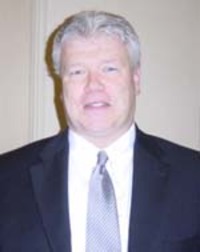


Kimberly Smith-Cofield, New Director at CAAS

On January 26, 2009, in Community/Arts, by The News Staff
 
"I am grateful to join a passionate organization like CAAS."
The Board of Directors of CAAS, the Community Action Agency of Somerville, is pleased to announce that Kimberly Smith-Cofield is the new Executive Director of Somerville's anti-poverty agency. She began work on Monday, January 5.

"We are very lucky to have found someone with as much passion for CAAS' work as Kim," said Board President Paul DiPasquale. "We welcome her to Somerville and to CAAS."

"I am grateful to join a passionate organization like CAAS," Smith-Cofield said. "CAAS addresses the hard realities of individuals and families that live in the wealthiest country in the world– and yet are plagued with being among the 22% of our overall population living in poverty. These numbers are bound to climb as the country's financial, housing, education and immigration policies and services continue to go through drastic changes. I'm impressed with CAAS' program, staff and board, who have a forward approach as we look to the organization's next chapter in its life."

Kimberly Smith-Cofield's career in human services spanned twenty-eight years before her arrival at CAAS, addressing the needs of organizations serving communities, children, families, adolescent boys and girls, and people with mental illness and developmental disorders. She has directed other agencies in the Greater Boston area including Federated Dorchester Neighborhood Houses, 2000-2003, and Casa Myrna Vasquez, 1994-96. She served as Vice President and Chief Operating Officer at the Urban League of Eastern Massachusetts, 1998 to 2000, and Associated Day Care Services of Metropolitan Boston, 1996-1997.

Smith-Cofield received her B.A. in Sociology from Vassar College in 1981 and a Master's degree in Education from Cambridge College in 1992. She participated in the Executive Transitions Program at Third Sector New England, receiving Interim Executive Director Certification in 2007.

Smith-Cofield will follow Jack Hamilton as Executive Director of CAAS, where he served since 1983 before retiring on January 2. Tickets for the Jack Hamilton Retirement Party at the Dante Club on Friday, January 23, are still available at a cost of $15. Please send a check made out to "CAAS/Retirement Party" to CAAS, 66-70 Union Square #104, Somerville, MA 02143, attention Ellie Blute, by Friday, January 16.

The mission of CAAS is to reduce poverty among local families and individuals while working to counteract, and whenever possible eliminate, the societal conditions that cause and perpetuate poverty. For more information about CAAS, see www.caasomerville.org.


Are YOU Eligible for the Earned Income Tax Credit?

On January 26, 2009, in Community/Arts, by The News Staff
 
A Tax Deduction You Should Know About…
The Earned Income Tax Credit (EITC) can put up to $5,548 in your pocket this tax season! EITC is the federal and state income tax credit available to low and moderate-income working families and individuals. Don't miss out! Last year, more than 50,000 eligible working families in Massachusetts failed to apply for EITC, leaving an estimated $75 million in unclaimed money in Washington, D.C. Couldn't you use that money where you live?

The Commonwealth of Massachusetts, the Internal Revenue Service (IRS), and anti-poverty agencies like CAAS, the Community Action Agency of Somerville, are teaming up to spread word regarding the EITC. You can find FREE tax filing assistance to help you access those credits.

CAAS encourages you to make an appointment with National Student Partnerships (NSP) to file for your EITC and Child Tax Credit. NSP is an organization dedicated to combating poverty in our nation's communities by engaging college students in this effort. To sign up for free tax preparation from NSP, call the Somerville office at (617) 591-9400, or the Cambridge office at (617) 349-6342.

Volunteers will prepare federal and state income tax returns and provide free, confidential tax preparation services at The Family Center, located at 366 Somerville Avenue in Somerville, and at the Cambridge Multi-Service Center, located at 19 Brookline Street in Cambridge. Tax services will be provided from January 26 through April 15 by appointment only. NSP volunteers will file your tax returns electronically, shortening your wait to receive refunds.

If you are a working family-single or married-with two or more children, and your family earned less than $41,646 in 2008, you may be eligible for up to $5,548 in federal and state credits. A family with one child, earning less than $36,995, is eligible for up to $3,355. A single person or married couple without children who earned less than $15,880 is eligible for $504. Use the FREE EITC tax preparation sites, get your refund in seven to ten days, and keep your money! You earned it!

The mission of CAAS is to reduce poverty among local families and individuals while working to counteract, and whenever possible eliminate, the societal conditions that cause and perpetuate poverty. For more information about CAAS, see www.caasomerville.org.


House Speaker Sal DiMasi to resign on Tuesday

On January 25, 2009, in Uncategorized, by The News Staff


By Bob Katzen / Beacon Hill Roll Call

House
Speaker Sal DiMasi today announced that he will resign from the
Massachusetts House of Representatives on Tuesday, January 27. The
embattled speaker made his intentions known this evening through a
letter to his House colleagues. The memo said, "Today, I made a
personal decision that leaves me with mixed emotions. Effective 5 p.m.
on Tuesday, January 27, 2009, I will resign as the state
representatives from the Third Suffolk District and as speaker of the
House. I am excited on the one hand to move on to other challenges and
new opportunities. I am sad to leave the House of Representatives which
has been like a home to me and the people who are like family."

DiMasi
has been under fire in recent months for alleged ethics violations. The
most recent allegation was made last week when the Boston Globe
reported that Richard Vitale, DiMasi's former accountant and campaign
treasurer, paid some legal fees of DiMasi's in-laws. Vitale has already
been indicted on charges of violating lobbying laws.

The letter
from DiMasi continued, "No matter what the cynics and critics will say,
all my actions as state representative and as speaker were based solely
on what I thought was in the best interests of my district and the
people of the Commonwealth. I leave the Statehouse knowing that I did
what any good public servant hopes to do before they end their service
– I made a difference. I am proud of all I have done and I leave with
no regrets, – not one."

According to DiMasi's communications
director, David Guarino, DiMasi will give a farewell speech at a House
session on Tuesday at 1 p.m. and a Democratic caucus will be held at 11
a.m. Wednesday to elect a new speaker.

Two candidates
hoping to succeed DiMasi, current Ways and Means chairman Rep. Bob
DeLeo (D-Winthrop) and Majority Leader John Rogers (D-Norwood) have
both in recent weeks indicated that they have the 81 votes necessary to
be elected speaker.

DeLeo, moments following this breaking news,
sent out an e-mail to the media. "I thank Speaker DiMasi for his
service to the House. Today, with humility and an eagerness to work on
the issues we face, I announce my intention to be a candidate for
Speaker of the House. I will work to restore faith in the House through
meaningful ethics reform, to guide the state budget through perilous
fiscal times, to fix our statewide system of transportation and to
serve the Commonwealth and its people with the knowledge that our
actions and decisions will have lasting affects for all people of
Massachusetts."


These five Somerville Police Officers (L to R in both pictures: Carmine Vivolo, Dan Rego, Stephen Carrabino, Kevin Shakelford, and James Slattery) went to Washington, D.C. to assist with security for President Obama's Inauguration last week. They were part of a group of 85 officers from NEMLEC (North East Massachusetts Law Enforcement Council), which joined approximately 8,000 officers from across the country and an estimated 10,000 National Guard troops in providing security for the historic occasion. Photo took place at the Law Enforcement Memorial in D.C.


A note from Alderman at Large Bruce Desmond

On January 24, 2009, in Uncategorized, by The News Staff

(The opinions and views expressed
in the commentaries of The Somerville News belong solely to the authors of
those commentaries and do not reflect the views or opinions of The Somerville
News, its staff or publishers.)


The
Golden Light Restaurant has made their share of mistakes. There is no
denying they have flagrantly ignored the demands and authority of the
Board of Aldermen. Their most egregious offense was ignoring the orders
of Police Captain O'Connor to close for the night. But after all is
said and done it comes down to them being guilty of poor judgment and
poor decision making.

Some of my colleagues believe I have
given them one too many chances when I voted in favor of the 60 day
trial period for extended hours. When I made that vote I believed that
their poor judgment and poor decision making could be corrected and
that any business that has provided 26 years of good service to our
community shouldn't be written off as if they had committed a capital
offense. Aside from bruising the ego's of some of my colleagues on the
Board of Aldermen and ignoring Captain O'Connor's orders to close at
the appropriate time, have they committed such horrible or horrendous
offenses that would warrant us to not try everything in our power to
bring a business that has operated in Davis Sq. for 26 unbridled years
into line with newly developed policies being set by the Board of
Aldermen.

There is no arguing they were wrong and out of line,
but while doing business over the past 26 years in the same location I
have only recently heard about noise and littering complaints. I
haven't seen or heard of any evidence relating to Health Department
violations. I haven't heard complaints about customers being cheated or
treated poorly; in fact it's been just the opposite. Nearly 200 people
signed a petition to allow the extended hours. Dozens of people took
time out of their evenings to appear at two separate public hearings
and give testimony in favor of the extended hours as opposed to one
email received and four individuals appearing in opposition. This tells
me that they have been providing a good product and good service to the
people of our community for the past 26 years and that the service,
although not perfect, is appreciated.

As far as noise and
littering complaints are concerned, it's not fair to hold the Golden
Light Restaurant accountable for all the noise and littering that
occurs after 2:00AM in that end of Davis Square. The Golden Light can
and should accept some of the responsibility but 2:00AM closing times
for bars holds much of the responsibility for that noise as well. We
must work together to ensure that the city and all of the businesses
that we allow to remain open past midnight play a roll in maintaining
peace, quiet, and cleanliness in the neighborhoods after closing time.

Any
time I make a vote that affects someone's livelihood or someone's life
work; I have always and will always error on the side of caution. Such
is the case with my vote on the Golden Light Restaurant. At this point
in time I have provided every opportunity for them to understand and
operate in an appropriate manner within the guidelines of the City of
Somerville. After all the testimony that has been given and all the
discussions that have taken place and everything we have gone through
on the Board of Aldermen I will have no hesitation whatsoever to roll
their hours back to midnight seven days a week if any further
infractions or abuse of operating hours is to occur. I can say this
because I have now done everything I possibly could to help them.

Bruce M. Desmond

Alderman at Large and Chairman of Licenses and Permits


Somerville leads the way to green

On January 23, 2009, in Uncategorized, by The News Staff


By Cathleen Twardzik

In
which type of container do you place your recyclable bottles, before
placing them in your recycle bin to be picked up? If you said 'a
plastic shopping bag,' then you will have to "Get a new plan, Stan,"
for soon, that will be ancient history in Somerville, because that
practice was forever banned by the city.

In today's world, in
which global warming is raging like an uncontrollable hard-to-cure
virus, it is essential that Somerville's environmentally-friendly
nature serve as a model to other communities, many of which could ask
residents to emulate the city's "green" effort.

In accordance
with Somerville's sustainability efforts, residents and business owners
will be encouraged to comply with and to exhibit an increased level of
participation in the city's renewed recycling education campaign.

Under
current rules, plastic shopping bags, even when used to store other
recyclables, such as bottles and cans, as well as Styrofoam and
food-stained cardboard, including pizza boxes are unacceptable items.

Presently,
recycling rules deem it acceptable to place glass containers, plastic
containers marked 1-7, metal cans and containers, and milk and juice
containers inside of blue bins.

"Clear" plastic bags must
encapsulate shredded paper and extra containers placed next to bins. In
comparison, plastic shopping bags will not be accepted.

However,
outside of recycling bins, cardboard, newspaper and mixed paper will be
accepted, only when tied together in a bundle or in a paper bag.

"Basically,
we accept anything for recycling that the recycling facility will
accept." There are other options for the items we don't accept,
though," said David Lutes, Director of the Office of Sustainability and
Environment (OSE). For example, Lutes suggests recycling plastic
shopping bags at local grocery stores.

The City of Somerville
was honored as one of the nation's top environmentally-sustainable
cities by the organization, Our Green Cities. Founded by Kent Portney,
a professor at Tufts University, it spotlights cities across the
country. In Massachusetts, Somerville stands out as the only city to
receive a spot in the Top 20.

Our Green Cities recognizes
municipal leaders, all of whom display a commitment to the promotion of
sustainability efforts in their respective communities. The way in
which the organization accomplishes that task, is by its serving as a
link, between local leaders and the resources, which are needed to
fashion a more sustainable community. Mayor Curtatone was chosen as one
of the 20 "Top Mayors for Sustainability" of 2008.

In 2007, The
Board of Aldermen formed a "permanent Subcommittee on Energy Use and
Climate Change," which develops innovative environmental policies and
identifies additional energy conservation opportunities, and finds ways
to reduce Somerville's carbon footprint.

Since 2006, the City of
Somerville has reduced carbon emissions through the implementation of a
number of aggressive energy efficiency measures. The city purchased
biodiesel fuel for Department of Public Works (DPW) vehicles and many
city department-owned vehicles, and purchased hybrid vehicles and Smart
Cars. In addition, the city has installed renewable energy in some
municipal buildings; as well as a 10 kilowatt (10kw) photovoltaic array
on Somerville High School.

Somerville High School (SHS) does
much to protect the environment. Ryan Guilmartin is in charge of the
recycling program there, and, for seven years, he has been a teacher in
the social studies department, as well as the Student Council advisor
at the school.

"There is an ecology/oceanography course offered at SHS. It has existed for many years," said Guilmartin.

Specifically, the ways in which the school protects the environment are great.

Student
Council has reinstated the paper recycling program, which has been a
tremendous success. "We are currently in the process of adding the
recycling bottles in the cafeteria," said Guilmartin. "Student Council
is also researching the feasibility of installing solar panels on the
roof."

Cara Carpenter recently initiated a brand new
environmentally-related club — the Green Club — at the school,
according to Guilmartin.

However, Styrofoam plates and cups are still used in the cafeteria at Somerville High School, according to Guilmartin.


Tyson Clark Cast in Chitty Chitty Bang Bang
Somerville's Tyson Clark is one of six children cast to appear in the Boston engagement of the Broadway musical Chitty Chitty Bang Bang, playing at the Citi Performing Arts Center Wang Theatre February 4-8, 2008. If you'd like to see Tyson and all of the other talented performers in this delightful show, here is the schedule and ticket information:

CHITTY CHITTY BANG BANG plays at the Citi Performing Arts Center Wang Theatre Wednesday, February 4 through Sunday, February 8. Performances are Wednesday through Saturday evenings at 7:30 p.m., with matinees Saturday at 2:00 p.m. and Sunday at 11:00 a.m. and 3:00 p.m. Tickets are priced at $72.50 – $25.50; all prices include a $3.00 facility/education-public programming fee per ticket.

Tickets for CHITTY CHITTY BANG BANG are on sale at the Citi Performing Arts Center Box Office, online at www.citicenter.org or by calling 866-348-9738. Discounted tickets are available for groups of 15 or more by calling Citi Performing Arts Center Group Sales at (617) 532-1116. CHITTY CHITTY BANG BANG is an exclusive attraction of The Club at Citi Performing Arts Center. Club members can purchase tickets by calling (877) 232-8898, online at www.citicenter.org/club or in person at the Box Office Monday – Saturday, 10 AM – 6PM.


Plan will give municipalities revenue tools to offset local aid cuts, manage more efficiently
Despite the immense financial challenges facing the Commonwealth during this national recession, Governor Patrick today reaffirmed his commitment to cities and towns, announcing that he will protect education funding from cuts and will limit reductions in state aid to cities and towns this year and next.

The Governor told members of the Massachusetts Municipal Association gathered for their annual meeting that he will prevent cuts to so-called Chapter 70 education aid during the next round of mid-year spending reductions he will make next week. Additionally, he will hold Chapter 70 funding for city, town and regional schools at the fiscal year 2009 (FY09)level of $3.984 billion in his fiscal year 2010 (FY10) budget plan he will also release next week. That level, a 6 percent increase over FY08, was an all-time high for Chapter 70. Funding Chapter 70 at FY09 levels in the face of our current fiscal crisis is about ensuring that we don't sacrifice tomorrow's promise during today's downnturn," said Governor Patrick.

An unprecedented national economic downturn has resulted in a loss of nearly $2 billion in revenues this fiscal year and prompted the Governor to make mid-year spending cuts last October. The Governor was able to hold Local Aid and Chapter 70 education aid harmless by making deeper cuts in other state programs. However, economic conditions have rapidly deteriorated since then, requiring a second round of cuts that will have to include Local Aid.

Recognizing that cities and towns rely heavily on state aid for municipal services like police and fire and to help mitigate the property tax burden, Governor Patrick will limit reductions in unrestricted state aid to communities both in his emergency cuts and in the FY10 budget. For FY09, the Governor will trim $128 million from Lottery Aid and Additional Assistance, which-along with Chapter 70-make up the biggest portion of Local Aid. Taken together, this FY09 cut represents 2.3% of the total Local Aid budget. For FY10, Governor Patrick's budget will combine Lottery and additional Assistance Aid into a new category called General Government Aid. Combined with level funding Chapter 70, Local Aid will be cut by $375 million, or 7.1 percent below FY09.

To offset these unavoidable reductions, the Governor will propose a series of tools to help cities and towns generate much needed revenue. A one cent increase in the statewide meals and room occupancy taxes will generate approximately $150 million statewide which would be distributed using the existing lottery formula and will help to offset a portion of the Local Aid cuts. Additionally, the state will use a small amount of existing revenue to ensure that no community receives a total Local Aid cut of more than 10 percent. Taking the new revenues and additional mitigation aid together, the net Local Aid cut is reduced from $375 million to $220 million, or 4.2 percent below FY09.

Additionally, to further blunt the impact of Local Aid cuts and give communities the ability to manage their own budgets, the Governor is proposing to give cities and towns the ability to levy an additional 1 percent local options meals and room occupancy taxes. He will also re-file his proposal to eliminate an outdated property tax exemption for telecommunication companies. Taken together, these additional tools could generate up to $200 million statewide.

"This plan gives Massachusetts cities and towns the tools to offset the short-term pain of the economic downturn while also laying a foundation for growth and revenue stability for the better days that are ahead of us," said Governor Patrick. "If we cannot provide direct aid, let's at least untie the hands of local communities to capture the savings and raise the revenue within their reach."

As part of his comprehensive Emergency Recovery Plan, the Governor will file the second Municipal Partnership Act (MPAII) next week. Designed to help cities and towns help themselves by saving money, the bill will require municipal managers and municipal unions to devise health care plans as least as economical as the GIC. In order to help communities meet this cost savings standard, the GIC entry requirement will be reduced to 50% union approval. Failure to meet or exceed the GIC standard within a certain period of time will result in reductions in local aid payments.

Additional MPAII cost-savings proposals include responsibly extending pension schedules, moving retirees to Medicare coverage and a series of initiatives to encourage and facilitate regionalization of municipal services and other reforms around procurement and advertising.


ressman Mike Capuano Hosts Roundtable on the Economy

On January 22, 2009, in Community/Arts, by The News Staff
 
Congressman Capuano to Appear at Emmanuel College
On Friday January 23rd Congressman Mike Capuano will host an economic roundtable with representatives from academia, business and labor to discuss the status of the Troubled Asset Relief Program (TARP) and the economic stimulus package currently working its way through Congress. Following are the details:

Friday January 23rd from 9:00 – 11:00 AM

Media Availability at 11:00 AM

Emmanuel College; 400 The Fenway, Boston

Jean Yawkey Center

Trustees Room, Third Floor

Although the discussion itself is closed to the media, some participants will be available for questions when the roundtable concludes at 11:00 AM.


The new rules of the road

On January 22, 2009, in Uncategorized, by The News Staff

Jeremy F. van der Heiden

For
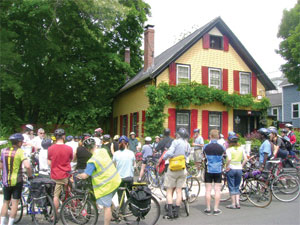
eight years, MassBike, (The Massachusetts Bicycle Coalition), has been
pushing for tighter and more rigid safety laws for bicyclists. Now,
after a long and arduous period of failing attempts to put the
Bicyclist Safety Bill into law, the state's bicyclist community
rejoices with Governor Deval Patrick's signing of the new law. This
progressive bill will help to polish the spotty record Massachusetts,
particularly Boston and it's surrounding communities, has in respect to
bicyclist's safety.

The law contains two brief but important
changes for bicyclists. First, a new signaling specification, making it
not necessary for bicyclists to signal when both hands are needed on
the handlebars, and second, bicyclists being allowed to ride
two-abreast as opposed to the old 'single-file' policy. The bill is
more concerned, however, with the etiquette of the motorists on the
road. This includes a strict statute against 'dooring,' or opening the
door in the way of bicyclists or pedestrians on foot, giving law
enforcement the power to issue a one hundred dollar ticket to violators
on the spot.

In addition, motorists now have to wait to pass
bicyclists on the right until they are at a safe distance, thusly
making it illegal for them to cut off a bicyclist on either side after
they pass. Motorists are no longer allowed to 'squeeze' bicyclists into
narrow lanes, and make abrupt right-hand turns when a bicyclist is
present. They must also now yield to all bicyclists before making a
left-hand turn, and are now held liable for hitting bicyclists to the
right.

In respect to police training and enforcement, police
are now required to receive training of the new laws. In the past, each
town had to come up with their own procedures to follow when going
through a given problem. Now, there will be a central and clear set of
rules and guidelines to follow throughout the Commonwealth, which will
certainly produce a better structure in regard to the law enforcement
of motorists and bicyclists.

The bill also includes a piece that
mandates bicycle rental businesses to supply helmets to their
customers. Also, the Bicycle Registration mandates have been repealed,
as well as the safety standard for helmets now refers to the guidelines
of the U.S. Product Safety Commission.

David Watson, the
Executive Director of MassBike, proclaims this new law as a "big step
in the right direction." When asked what this bill meant to him
personally, as the head of the committee who spearheaded the fight to
make this all possible, he replied "this shows the strength of the
bicycling community, and how as a whole the people want to improve
their own communities."

Bicyclist's safety, however, is not
the only area that will be benefiting from the bill. This can be seen
as an obvious effort to improve major issues such as the environment,
transportation as a whole, health, and the erratic nature of gas and
oil prices. In a nation struggling for a vast turn-around in respect to
obesity, pollution and economic strife, the betterment of a clean and
healthy form of transportation is essential. According to Watson, "this
is an environmental bill, a safety bill, a health bill and a
transportation bill. This is a quality bill, that improves the standard
of living for all."

With bicyclist's safety being such a big
issue throughout the Commonwealth, in communities like Boston,
Somerville and Cambridge, many potential bicyclists could be steered
away from getting a bike. These laws, along with Mayor Thomas Menino's
promise two years ago to "do a lot with bikes," including his
appointment of former Olympian Nicole Freedman to the Director of
Bicycle programs, a position that had been without a director since
2003, are all paving the way for a drastically improved environment for
bicycling.

Watson described Boston and the surrounding areas as
being "easy to get around" because of how flat most of the layout is,
and how there are "a lot of bikers" which make it a "good community to
bike in." This is proven in the way that this new bill was firmly based
in grass-roots organizations, dedicated legislators and a call for
change from the people.

Bicycling Magazine placed Boston in
their "worst cities for cycling" list three different years. Now, they
are proclaiming it to be "the future best city for cycling." The
efforts of people like Watson, Mayor Menino, Governor Patrick and the
collective bicyclist community, as well as organizations like MassBike
are proving to be responsible for this swift and somewhat sudden
turnaround.

When asked what the future holds for MassBike,
Watson responded how "we will attempt to gain better federal funding to
improve the infrastructure of the roads themselves to further improve
the safety of bicyclists. Massachusetts is last in the country for the
funding of this transportation; especially in the way those funds are
distributed. The Executive Office will try to get federal and state
legislators to direct a fair share of funding to bicycles and
bicyclists."

Awareness will also be key in making sure that
this new law holds substantial weight on the road. "We will have to
reach out beyond the bicyclist community," Watson stated, "making sure
law enforcement knows them, as well as motorists."

For
additional information on the new Bicyclist Safety Bill, go to
MassBike's website, www.massbike.org. There, the laws are listed and
explained in full, as well as the other measures and projects this
important activist organization is taking on.