
Lounging in the ‘Ville

On February 25, 2009, in Uncategorized, by The News Staff


Jimmy Del Ponte
On The Silly Side

(The
opinions and views expressed in the commentaries of The Somerville News
belong solely to the authors of those commentaries and do not reflect
the views or opinions of The Somerville News, its staff or publishers.)

Today
there are plenty of places in Somerville where you can go to have a
meal and an adult beverage. From one end of the city to the other,
these mid to up-scale eateries offer an enticing menu and a wide array
of inebriates. There was a time, not too long ago, when local barrooms
were just that, barrooms. If you wanted to see what food was served, it
was usually right in front of you, in a large glass jar or hanging on a
display rack. The fare was simple, including bags of chips, peanuts,
slim-jims and pickled eggs. The upscale joints offered beer nuts to
their customers – bon ap√©tit!

Now, most establishments offer a
slew of fancy beers and ales in bottles and on tap, as well as in
bottles. The transformation from gin-mill to hip-spot seems to have
happened rather quickly. As usual, my area of expertise is the Davis
Square area, so most of my first-hand information comes from there.
Thankfully, Sligo's, Redbones (formerly The Coronet, then Barnaby's)
and Johnny D's have kept the traditional bar set-up alive. These places
haven't changed that much, except for the addition of what seems to be
countless new brews including lights, darks, ambers, wheats, summers,
winters etc. Back in my heyday we didn't have so many choices. My
favorites were Bud, Rolling Rock and once in a while a nice dark
Guinness. In the older days, some of the preferred brews were these:
Heffenreffer, Rheingold, Pabst, Schlitz, Schaeffer, Carling Black
Label, Narragansett Lager and Knickerbocker. Just saying those names
brings back memories, fogged as they are.

Can you believe that
in just Davis Square alone, there are about 32 restaurants and roughly
7 bars? To get into some of these places you are required to have an ID
and a piercing of some kind. As usual my timing is impeccable. I quit
drinking and there are now endless places and countless choices. My
liver is very grateful that those days are behind me – and just my
luck, I have three piercings, one on one ear, and two in the other.
What a waste! I am the infinite designated driver, which is a very good
thing. A cold O'Doul's is fine for me these days.

I happened to
have seen a packed to the gills Tufts shuttle bus heading to Davis
Square at around 6:30 Saturday night. I'm sure not all the students
were heading for Joshua Tree and The Burren, but you can bet a lot
were. The standing room only bus occupants were decked out in their
trendiest Saturday night best (I know because I pass them while walking
the dog on College Avenue).

Now that St Patrick's Day is in
sight, memories of The Blarney Stone Pub start filling me' head. How
many of us actually drank green beer? I think of the Stone whenever I
walk past Ciampa Manor on College Ave.

I had the pleasure of
recently talking with a gentleman who served about 8 years on
Somerville's Licensing Board. He had some interesting stories for sure.
He felt that Somerville had enough bars and he tried to only give
liquor licenses to restaurants. Under his watch, Pal Joey's (aka El
Cids, and Steppin' Out) lost their license due to too much trouble. He
gave them the option to sell their license. The Jumbo in Teele Square
was also a trouble spot (I don't recall any brouhahas when I played in
bands up there). He was in charge when Bertucci's first opened in Davis
Square, happy to see a new restaurant open – too bad he didn't get in
on buying some Bertucci's stock!

As I've said, I don't drink
alcohol (anymore), but I still love the smell of these old, seasoned
(or fermented I should say) joints. Back when I was imbibing, you could
still smoke your brains out while you drank your mind away. Two or
three hours in the barroom was easily detectable by the smell of
cigarette smoke that saturated your body and clothes. Imagine what it
did to our insides.

There are a few places in Ball Square that
we used to frequent for an ale or two as well – The Willow was where I
would go if I was in that area. You may have memories of the joints
that lined Somerville Ave, Broadway and in East Somerville. There were
plenty of bars, with plenty of stories. So while you may be craving an
ice cold Aventinus wheat Doppelbock and an omelette with red peppers
and goat cheese, I'd rather have a frosty Pabst Blue Ribbon and a
pickled egg.


You can email Jimmy directly at: jimmydel@rcn.com


TheSomervilleNews.com poll of the week

On February 25, 2009, in Uncategorized, by The News Staff

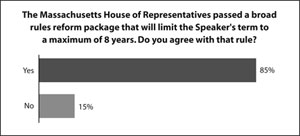
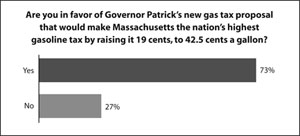
In
addition to breaking news, sports and opinion, TheSomervilleNews.com
also features a daily poll in which you, the reader, tell us where you
come down on local issues. This week's polls concerned your views on
whether or not you agreed with House of Representatives passing of a
rule that will limit the Speaker's term to a maximum of 8 years and if
you were in favor of Governor Patrick's new gas tax proposal. If you
don't agree with the results, simply log onto TheSomervilleNews.com.


Davis Square Task Force agenda and meeting room full

On February 25, 2009, in Uncategorized, by The News Staff

By Ben Johnson

The
Davis Square Task Force held a meeting this past Monday night, February
23rd. Somerville Aldermen, small business owners, and interested
residents all gathered in the Tufts Administration Building (TAB) at
7pm to discuss ongoing and future business developments and community
updates in the Davis Square area.

The crowd in attendance
Monday evening was sizeable with nearly 30 people squeezed into the
small classroom on the first floor of the TAB. The meeting's agenda
included presentations about constructions and business developments
followed by crime updates and then a discussion of The Davis Square
Task Force's future.

The first project brought to the floor
was a presentation on the plans for constructing new townhouses at the
Carli Fence Site on Willow and Newberne Street. The presentation was
given in part by project architect Peter Quinn who said, "The Bike path
will be the address" of the new townhouses.

In the past,
various developers have proposed plans for the Carli Fence Site, but
those plans usually consisted of 10 to 20 new residential units. The
current plan will only be comprised of seven units. There will also be
21 parking spaces available to the location, which is far in excess of
parking requirements for that site. Quinn hopes that by building new
homes by the bike path, it will encourage residents to walk to the T
and use bikes for their commutes. "The bike path is such an amenity to
this community," Quinn said.

This plan was greeted with
positive reactions from everyone on the Davis Square Task Force. It was
mentioned though that the Bike Path should be accurately be referred to
as "The Community Path" as people do not just bike on it.

J.P.
Sacco, owner and proprietor of Sacco's Bowling Haven, Davis Square's
historic bowling alley, introduced Jay Gould, owner of the chain
"Flatbread All Natural Pizza." Sacco intends on selling Gould his
bowling alley, explaining, "I have been attempting to get out of the
bowling business." The Sacco family has been running bowling alleys
since 1895. Sacco's Bowling Haven in Davis Square has existed since
1939.

Speaking to the Task Force, Gould explained he wants not
only to be in the Davis Square, but "to be a part of the community."
Gould plans on transforming Sacco's Bowling Haven into another
restaurant in his chain of "Flatbread All Natural Pizzas." But bowlers
should not fear – Gould plans on keeping 10 bowling lanes open, so
families and friends can continue to bowl. Unfortunately for billiards
enthusiasts, the pool hall will be removed for the restaurant.

Gould
plans on keeping the façade of the building basically the same, with
the minor addition of a small "Flatbread Pizza" sign. He will also be
applying for a full liquor license, though Gould was quick to add his
restaurants are all about families. "The kids can run around in our
restaurants," Gould explained, "and if the parents don't like it we
tell them to leave."

When asked if he would still pursue this
project if the liquor license was not approved Gould said, "No, I like
to have a beer with my pizza."

Also at the meeting was a
presentation about turning a reconverting a vacant property near the
Powderhouse Rotary back into a convenience store and a brief update on
the plans for a new hotel in the Davis Square area.

Although
the plans for the hotel are still in beginning stages, there was one
irate attendee at the meeting who adamantly opposed the idea of a new
hotel in Davis Square. "The hotels in Somerville have led to nothing
but drugs and prostitution," she said, "we do not need a hotel."

But
without definite plans for location or even the size of the hotel, this
argument will have to be heard again and debated at many meetings in
Somerville's future.

Later in the evening there was a
suggestion by Michele Biscoe, representative of the dog walking
committee, that dog walkers who frequent Davis Square at night should
organize a crime watch. "We want to motivate dog owners to do something
to make small business owners and their customers feel more safe,"
Biscoe said.

Biscoe and others suggested that when walking dogs
through Davis at night, dog walkers could keep a vigilante eye for
anything suspicious going on. But one member of the meeting was quick
to note that most of the violence and criminal problems occur after
midnight – a time when most people are not walking there dogs.

"It
would never substitute for the police department," Biscoe asserted.
"Its about eyes and ears. This is not about sicking your dog on
somebody." Whether dog walkers will actually organize to become a crime
watch will be subject to future development.

Other discussions
included the recent shooting and carjacking by Diva and whether later
hours at bars and criminal activity should lead to more late night
police details.

The Davis Square Task Force meets regularly
throughout the year. Everyone is welcome to come to the meetings to
hear about recent developments in the Davis Square area.

The
Task Force was founded in 1977 while the Red Line Extension into Davis
Square was still in the planning stages. Since then it has initiated
many projects, many of which led to the redevelopment of Davis Square
in the 1980s. The Task Force is committed to keeping an open dialogue
between the residents of Somerville and the small business owners that
make Davis Square such a thriving commercial center.


Newstalk for February 25

On February 25, 2009, in Uncategorized, by The News Staff

Tuesday,
March 3rd at 7pm at City Hall – finally the hearing that counts, not
all those fake hearings that they made up over the past several months
on the Proposed Condo Conversion Ordinance, – so-called new and
improved and the one pushing for it is Princess Rebekah the Alderwoman
from Ward 6 (who by the way doesn't own property). After a miserable
defeat a few years back on her first attempt, they resurfaced last year
under the lie that the committee make up which included Greater Boston
Real Estate Board members. Only a staff person from the GBREB was on
the committee and not the dues paying, local working and living
members. This guy who is CEO of the board sat on the committee, he even
said he never owned property or sold property he is a lawyer and a
resident for 15 years paying rent here in Somerville (according to
sources moved out a long time ago). They touted back last summer this
was a new and improved Ordinance and that the Board of Realtors
endorsed it – NOT TRUE – just ask any dues paying member here in
Somerville. So march out to City Hall that night and once more show
Princess Rebekah and her small group of minions (PDSers), staffers up
at city hall and the SCC that are pushing this – that this is RENT
CONTROL – nothing more, nothing less. It's bad for the tax base, it's
bad for tenants and owners and it's bad for everyone in this economy.

***************

Helicopters
hovering over the city the other day, this time over Nissenbaum's Auto
Recyclers & Parts place on Columbia Street, seems there was a
"Reality TV Show" filming there – with all sorts of camera trucks and
producers there temporary closing off the entire area around the shop,
propping it up for filming set for the day!

***************

Condolences
to Jimmy Brennan's (not the former mayor but the Plumber) family and
friends and he had a lot of them, he passed away at home last Saturday
evening with his family present. Jimmy always had a smile and a good
word for everyone. Always there to help aide and assist anyone that
needed it. His wake is at Doherty's tonight (Wednesday the 25th from
4pm to 8pm) – we who knew him will truly miss him.

***************

The
Hanneke Cassel Band, featuring Ari Friedman (cello) and Christopher
Lewis (guitar) will be playing at the Clarendon Hill Presbyterian
Church at 155 Powderhouse Blvd on Saturday, February 28th at 8:00 pm.
Fionnuala O'Donovan and a special surprise guest will be opening for
them. Tickets are $15 at the door, $12.50 advance reservations, $10 for
seniors and students – for more information, go to:
notlobmusic.googlepages.com

***************

What's going
on over in Lower Broadway at the old Melo Tone building? Seems someone
is shooting up the exterior of the building, according to sources this
has happened three times so far! Good thing Lower Broadway has a Police
substation practically across the street from this location.

***************

A
big get well to Alderman Tom Taylor, who we hear isn't doing all that
well, we know he's in and out of the hospital, but we keep hearing he's
not doing too well – we hope everyone will join us in wishing him well
and a speedy recovery at his home in Ward 3. Tom has been a watchdog
for Ward 3 here in Somerville for many years we should all send him our
prayers and good thoughts!

***************

Guess at the
Davis Square Task force meeting Princess Rebekah found out that the
proposed Dunkin Donuts at the old convenience store at Powderhouse
could go there with or without her permission (she was against them
going there). Lots of neighbors and residents are in favor of it
anyway, but of course the Princess dances to a different piper. This
particular owner presently owns the DD in Davis Square and on Highland
Ave and is highly respected and a good citizen here in Somerville. He
applied for all the necessary permits and licenses to open; it's going
to be a combination store and Dunkin Donuts, which was there before
except he's adding the Dunkin Donuts.

***************

Mayor
Joe had another successful fundraiser last night in Davis Square at
Sagra, no rumors about anyone mounting a challenge to his re-election
bid this year, he's been a pretty good Mayor in our opinion – but then
again we were the only paper here in Somerville to endorse him from the
beginning. Seems like Alderman Sean O'Donovan has been making the
rounds in Ward 5, making his presence known and building up a war chest
just in case the PDSers find some loser to run against him.

***************

Seems
like the Farm Team editor has too much time on her hands – the other
day she wondered WHO might be the famous Somerville News blogger "Dr.
Mrs. McCarthy" in real life – she listed a bunch of names of
possibilities. Well, we regret to inform her that none of the names
mentioned were correct, we heard from Dr. Mrs. McCarthy today (on news
day) and she's been resting at the Home keeping a low profile after the
loss on election day in 2007 – she took the last election hard – but
she wanted us to tell all her fans she'll be back. We think she sounds
differently – she mentioned she was also upset over the lack of Jell-O
and juice at the 8 o'clock rounds at the home.

***************

Seems
like the PDSers web site was down for a few weeks, guess someone forgot
to pay the bill, maybe they were looking to see if they got any money
from the stimulus package recently voted on.

***************

Are
you missing your rubbish barrel lid? Recently a lot of people are
complaining of missing lids and the rash of tickets being given out.
We're wondering if the ordinance needs adjusting or is this a revenue
ploy?

***************


Proposed condo ordinance is back and up for debate

On February 25, 2009, in Uncategorized, by The News Staff


The “new” condo conversion ordinance will have its first real public hearing at City Hall this coming week.

By Keith Cheveralls

A
revised version of the condominium conversion ordinance originally
proposed by the Mayor's office in 2006 is up for public comment at a
hearing next Tuesday.

The revised version of the ordinance is
the product of eighteen months of work by a task force appointed by
Mayor Curtatone in response to the controversy provoked by the original
2006 proposal.

Both versions of the proposed ordinance would regulate the conversion of two- and three-unit rental properties.

The
2006 proposal, made in response to the increasing rate of two- and
three-unit condo conversions in Somerville during the real estate boom,
met with fierce criticism from small property owners.

It would
have increased tenant notification times to four years, and relocation
assistance to $4,000 for low- and moderate-income, handicapped and
elderly tenants. For all other tenants, the notification time was to
have been two years, and relocation payments were to have been $2,000.

Somerville's existing ordinance limits notification time to two years, and relocation assistance to one month's rent.

The
proposed measures prompted Skip Schloming, of the Somerville Small
Property Owners Association, to call the proposed ordinance "de facto
rent control," and were challenged by Alderman Bill White on legal
grounds at a contentious public hearing in 2006.

The new
proposal is a compromise between the original 2006 proposal and the
concerns voiced by property owners. It decreases notification times for
two- and three-unit properties to six months for all tenants, and
halves relocation assistance to $2,000.

But just how much of a compromise these changes represent depends upon whom you ask.

"The
new version is slightly better than the old one, but still is
heavy-handed regulation," Schloming told The Somerville News. Schloming
and the Somerville Small Property Owners' Association remain opposed to
the revised version of the ordinance.

"It is bad policy all
around. It hurts rental property owners because, by imposing
restrictions, delays and extra costs, it reduces the value of rental
property across the whole city," Schloming explained, adding that the
consequent reduction in tax revenue "hurts everyone, including the city
as a whole."

"If you look at the ordinance, it has moved
substantially from where it was a couple of years ago," Greg Vasil, CEO
of the Greater Boston Real Estate Board, told The Somerville News, but
as "a further restriction on private property rights" the GBREB also
opposes the ordinance. Vasil was one of two representatives of property
owners on the task force.

He pointed out that "many condo
conversions created housing for people who couldn't afford to buy a two
or three family property," which, he said, is not a process that the
city should restrict.

Those in favor of the revised ordinance speak of it in different terms.

"It's
a fair compromise in that it gives clarity to the process. It allows
landlords to convert their property, but balances that against tenants
who are facing displacement and must find time and money to relocate,"
explained Ellen Shachter, a senior attorney at Cambridge and Somerville
Legal Services, and one of two tenant advocates on the task force.

Mary
Regan, of the Somerville Community Corporation, explains that "Tenant
advocates gave up some of the things that would have been beneficial to
tenants in order to come up with this proposal that we thought would
gain the support of property owners."

The proposed ordinance
provides property owners "with a set of clear guidelines" for the
conversion process, and reduces their obligations to their tenants from
the original proposal, she said.

While proponents see the
regulation of two- and three-unit properties as a necessary consequence
of Somerville's high concentration of small rental properties,
opponents see the regulation as intrusive, pointing out that Somerville
is the only city in Massachusetts to regulate rental properties with
fewer than four units.

"We urge the city to deregulate the two's
and three's entirely," Schloming told the Somerville News, referring to
two- and three-unit properties. "Those two's and three's are two-thirds
of the city's housing stock — a huge segment of the tax base that is
being deliberately depressed in value by condo conversion regulation."

Somerville's
regulation of two- and three-unit properties dates back to the 1980s,
when a home-rule petition allowed the city to regulate those
properties. The existing ordinance regulating condo conversions dates
from the 1980s as well.

It has not been updated to reflect
increased relocation costs since that time, Shachter said, and has left
"tenants and landlords in limbo in terms of what parts of ordinance
apply."

The proposed ordinance addresses these concerns by
creating a review board to ensure that the process proceeds with
clarity and fairness, Shachter and Regan explained.

But Schloming expressed concern with the proposed review board.

"It
supervises every step in the conversion process and invites an owner's
tenants in to make objections and cause delays. Owners will need to
hire expensive attorneys to make their way safely through the condo
review board."

Of course, with the economy in crisis and real
estate prices in decline, the conditions that motivated the proposal of
the original ordinance-significant increases in the rate and
profitability of condo conversion-no longer exist. The number of
applications for condo-conversion permits declined by 61 percent from
2006 to 2008.

Both proponents and opponents, however, agree that
the ordinance remains relevant. Schloming argues that the ordinance
would "depress property values and reduce owners' equity in their
properties when those are already being threatened," as well as reduce
tax revenue at a time when the economy is already weak.

Shachter,
while acknowledging the poor economy, said that the proposed ordinance
should be enacted to protect tenants, explaining that "for tenants who
are being displaced, it doesn't matter if there are 10 or 60
conversions in a month-displacement is happening to them."

The
public hearing will take place on Tuesday, March 3, at 7:00pm, in the
Aldermen's Chambers at City Hall. A comparison between the existing
state law, Somerville's existing ordinance, the 2006 proposed
ordinance, and the revised ordinance, is available on Somerville's
government website.


Books of Hope helps writers discover how easy it is to become published

On February 20, 2009, in Uncategorized, by The News Staff

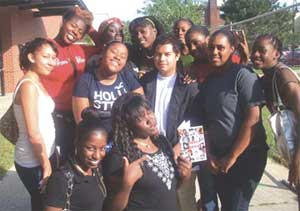
Writers of all ages shown how to become published.

By Meghan Frederico

Small
and independent presses offer aspiring authors an opportunity to break
into publishing, yet many new writers do not know how to use them to
their advantage.

"People think it's impossible to get
published," said Doug Holder, a Somerville poet, founder of the
Ibbetson Street Press and the Arts Editor for The Somerville News, "but
with small presses, it can be easier than they think."

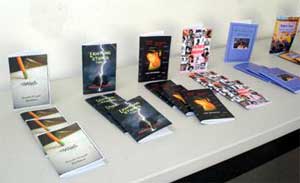
On
Monday, February 23rd, from 7-9 pm at 530 Mystic Avenue, Mr. Holder
will talk about how new writers can publish their work through small
and independent presses, or even create their own small press. He will
speak from experience in the industry, which includes running Ibbetson
Street Press, a poetry journal and publisher that produces the work of
about 7 new authors a year.

Attendees will have a chance to
participate in creative writing exercises, and will also hear from
guest speaker C.D. Collins, whose book of poetry was recently published
by Ibbetson Street.

The free event is part of the Youth &
Community Writers Series organized by Books of Hope, a collaboration
between the Mystic Learning Center, a nonprofit affiliated with the
Mystic Housing Development in Somerville, and the Somerville Arts
Council.

For the past decade, Books of Hope has sought to help
urban teens achieve self-expression and advocacy through creative
writing. The non-profit's writing workshops teach poetry, short story,
memoir, and non-fiction, and publishes books written by participants.
According to Florence Bergman, the director of the Mystic Learning
Center, Books of Hope has published over 125 young authors, who keep
all the proceeds from their book sales.

For further information about the event, contact Soul Brown at (617)640-0252.


Community

On February 18, 2009, in Latest News, by The Somerville Times

shelton_webBy William C. Shelton

In past columns, I’ve written about what an extraordinarily rich community Somervillians created and enjoyed in the first half of the Twentieth Century, and how it gradually disintegrated in the second half. Yet I don’t think I’ve ever clearly stated what I mean by “community.” It’s worth doing, because the word is used and misused to mean many different things.

Continue reading »


Old school Capuano speaks out

On February 18, 2009, in Uncategorized, by The News Staff
Congressman Capuano spoke out against banks that received bailout money.

By Jeremy F. van der Heiden

At
the House of Representatives in Washington last Wednesday, lawmakers
lined up the chief executives of the eight biggest banks in the country
for an old-fashioned tar and feathering. The executives were called
before the House Financial Services Committee to discuss with them
their dissatisfaction in the CEO's decisions in regards the spending of
billions of dollars in bailout money given to their banks by the
government.

The members of this panel of sorts included the
chief executives of Bank of America, Goldman Sachs, Citigroup, State
Street, Morgan Stanley, Bank of New York Mellon, Wells Fargo and Chase.
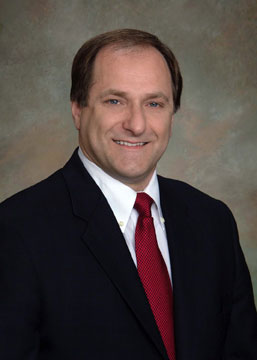
Probably the fiercest forayer of the day was Massachusetts' 8th
District's own Representative Michael Capuano. He was in classic form,
berating these executives with his allotted five minutes to speak.

First,
he asked how many of these executives engaged in dangerous, and
possibly illegal actions such as Credit Default Swaps, Collateralized
Debt Obligations, and Structured Investment Vehicles. Representative
Capuano asked, "How many of your banks had or currently have Special
Investment Vehicles, those off the books and somehow unregulated
subsidiaries of the bank or sister corporations?" To this, several
CEO's in front of him raised their hands to admit engaging in these
actions. Capuano answered back sharply, stating that, "So basically,
all or most of you engaged in all or at least some of the activities
that created this crisis in my opinion, because everyone of those
activities, especially the SIV's, to me, I think they're illegal."

He
went on to state "I can't believe no one has been prosecuted on this.
But then again, we haven't had any prosecutorial action whatsoever with
the last administration and the new administration has a little time to
figure this out, we'll find out whether anybody really cares."

Credit
Default Swaps, Collateralized Debt Obligations and Structured
Investment Vehicles are all forms of asset-backed securities – they are
intricate bank transactions that entail borrowing and lending to turn a
profit, one of the most basic functions of banks, but in this case the
risk is high because of the way they work. For example, Structured
Investment Vehicles work by borrowing money for a shorter period of
time at a low rate of interest, and lending money for a longer term at
a higher rate of interest. With the sparse amount of stability in both
major and minor companies today, this puts the parties capitalizing off
of these Special Investment Vehicles and those on the other end at risk
of taking major losses.

Representative Capuano continued on,
abashing the CEO's for the poor decisions they had made. Some of the
more quote-worthy statements included, "Basically, you come to us today
on your bicycles, after buying girl-scout cookies and helping out
Mother Theresa, telling us 'we're sorry, we didn't mean it, we won't do
it again, trust us.' Well, I have some people in my constituency who
actually robbed your banks that say the same thing…do you understand
that this is a little difficult for most of my constituents to take,
that you learned your lesson?"

In a classic Capuano style, the
statements reached a climax of intensity when the Representative began
to point and yell directly at the CEO's: "you created SIV's, you
created CDO's, you created Credit Default Swaps, you created the mess
we're in, and now you're saying you're sorry, trust us, we don't even
want the money. Interesting, no one has ever come to me telling me I
had to take billions of dollars."

He then expressed his
disappointment in the CEO's: "America doesn't trust you anymore…I
don't have one single penny in any of your banks, not one, because I
don't want my money going toward CDO's and Credit Default Swaps and
making huge bonuses…start loaning the money that we gave you, get it
on the street. And don't tell me we're not using that money for
bonuses, come on!"


The View From Prospect Hill

On February 18, 2009, in Uncategorized, by The News Staff


Dakota
Partners, aka Emerald Development, aka Austin Development, aka whatever
name they want to reinvent themselves as this year, is before the city
again tonight looking for yet another gift – this time an extension of
their construction permit for another year – only this time for a
laughable "hardship" variance. A hardship because, when you get through
all the language, the city essentially won't allow them to cut down a
tree – yes, you read that right – a tree.

They ask for a
"hardship" even after filing a lawsuit against the city, naming both
Mayor Curtatone and Alderwoman Gewirtz in it, stating that the city
illegally stopped them from proceeding by refusing to grant a permit to
remove a shade tree. That takes a lot of gumption – sue the city and
then ask for a gift – its called trying to strong arm a city by doing
whatever it takes to get what you want, and from what we hear it's not
the first time similar tactics have been used by this and/or other
developers.

Seven years of general craziness has swirled around
this specific location and this developer – and even though they won a
case that went before the State Supreme Court, why would anyone want to
continue in an area that abutters, neighbors, elected officials and
members of the local business community openly hate you and everything
you stand for?

In our opinion, it's simple – the almighty dollar
– that's why – it doesn't matter who says what, as long as they can
build. Of course, like any other animal backed into a corner, they will
continue to do and say whatever it takes to get what they want – they
supposedly have a mortgage on that property that would make your nose
bleed and have to be under pressure by the local bank that gave them
the money to do something, and soon.

Want to kill a couple of
hours – don't take our word for it – log onto the Registry of Deeds
online and try to follow the deed/paper trail and all the companies and
"investors" and mortgage holders related to this project and their
other projects – it makes for interesting reading, that's for sure. It
is enough to make your head spin, guaranteed.

It also wouldn't
be so bad if they hadn't left a bad taste in the community's mouth
after the last several projects they have done in this city either.
From what we hear, abutters, neighbors, Aldermen, local businesses,
contractors – pretty much anyone who has had to deal with them on any
level has had a less than pleasant experience.

We think it would
be much better if demo-man and his new friends from Charlestown or even
better yet, KSS Realty, were involved with this project instead of this
particular developer. In our opinion, this city doesn't need developers
like Dakota/Emerald anymore – even in this economy there are plenty of
people with plenty of money that won't step on and step over everyone
just to get their way.

For us, the only thing that would now
definitely prove to be the last straw is if the ZBA, under its current
less than intelligent leadership, grants this ridiculous "hardship"
extension.


Community

On February 18, 2009, in Uncategorized, by The News Staff


William C. Shelton

In
past columns, I've written about what an extraordinarily rich community
Somervillians created and enjoyed in the first half of the Twentieth
Century, and how it gradually disintegrated in the second half. Yet I
don't think I've ever clearly stated what I mean by "community." It's
worth doing, because the word is used and misused to mean many
different things.

Some use it to mean "place," although where
they live is often the only aspect that they share. Some refer to the
"immigrant community" or the "Italian-American community." Since
immigrants come from different countries speak different languages, and
observe different customs, it seems odd to me to think of them as
members of the same community. Presumably, this use of "community"
refers to whatever interests they share by being immigrants, or Italian
Americans, or whatever. Some, who feel solidarity with each other,
describe themselves as a "community." In this latter sense, "community"
is the third ideal of the French Revolution: Fraternity.

When I
have used the word in my columns, I mean a rich and interweaving
network of relationships in which people know each other and understand
that what they share is more important than their differences. In
community, these relationships-formal and informal-proliferate until
they create a place for everyone as whole individuals. Community's
members are known for who they are rather than what they are. Their
personal qualities are more important than their formal roles. In
community, there is room for as many leaders as there are useful things
to do, so there are leadership opportunities for all.

In
institutions, including those that provide social and human services,
relations are often hierarchical. In neighborhoods without community,
relationships are nonexistent. In communities, relationships are more
egalitarian. Because there is not an authority that defines the "right
way" and "wrong way" to do things, communities find creative solutions
to problems that institutions cannot.

They often do so quickly.
When an individual loses a job, a loved one, or their mind, they need
the immediate help and comfort that a community can provide. In its
absence, they endure the weary isolation that comes with applying for
food stamps, waiting for Social Security to decide, or being trapped
within a mental health system from which they may never emerge.

In
neighborhoods with community, we deal with each other as whole people.
n those without community, we deal with each other by accident. In
institutions, we deal with each other as roles.

In community, we are interdependent. To weaken one of us, weakens all.

Community
is the greatest security that a neighborhood can enjoy. When neighbors
know and trust each other, residential streets are not so much
anonymous public spaces belonging to no one, but familiar territory
that belongs to the neighborhood. Neighbors inquire when someone whom
they don't recognize is attempting to enter a neighbor's home. They
intervene when someone is being harassed on their street, friend or
stranger, because it is their street, and because they know that their
neighbors have their back.

The economic and cultural forces that
destroyed community in Somerville were largely beyond the community's
control. Factory closures eliminated thousands of jobs in the same town
in which workers lived. Suburbs held a powerful, but ultimately
illusive, lure. Steady erosion of hourly wages obligated women, who
were often the weavers of relationships, to enter the workforce,
whether they wanted to or not. The cars that got people to out-of-town
jobs, and the televisions that they watched to recover from working and
commuting, reduced opportunities for interaction. Gentrifications
brought thousands of professionals whose relationships revolve around
where they work rather than where they live.

It is impossible
for individuals or small groups to reverse the impact of such enormous
forces. But we can choose to recreate community in limited contexts,
like the few blocks surrounding where we live. We do this most
effectively by organizing shared actions around matters that are so
concerning that diverse neighbors are willing to take action, and that,
in order to make a difference, require cooperation among all who
participate.

If we create opportunities for specific and
achievable changes to make real our 80%-shared vision of a good
neighborhood, our diverse neighbors' focus is not on each other's
differences, but on how to accomplish shared objectives. In the process
of doing so, they develop relationships of trust and cooperation. They
come to see the situation through each other's eyes, understand each
other's differences, and appreciate those differences as assets rather
than liabilities. They create community.