




Pages
Stay In Touch
More
© 2026 The Somerville Times. All rights reserved.

(The Man, Back in the early So I finally make it home
|
|||
(The
opinions and views expressed in the commentaries of The Somerville News
belong solely to the authors of those commentaries and do not reflect
the views or opinions of The Somerville News, its staff or publishers.)
To the editor:
We
are proud of the partnership that we have created between the City of
Somerville and Tufts University. We share a commitment to a vibrant
city and robust neighborhoods. We agreed a number of years ago that
working together would make both Somerville and Tufts stronger.
In
2004, we memorialized our partnership in an agreement in which Tufts
committed to pay Somerville $1.25 million over 10 years. This agreement
was later amended, when Tufts agreed to forgive $500,000 in planned
rent payments by the city for space in Tufts-owned property – bringing
Tufts' total contributions under the agreement to $1.75 million. Tufts
offered this financial support to help the City make progress in
difficult budgetary times. In turn, Somerville agreed to work with
Tufts to achieve its future plans.
In the agreement, Tufts also
committed to a number of programs and practices that benefit
Somerville, including waiver of rental fees for use of facilities,
financial support for local children in Tufts early childhood education
programs and a reduced charge for course audits. Tufts also committed
to invest at least $300,000 in need-based grant aid each year for
undergraduate students from Somerville. This spring 20 students from
Somerville were enrolled as undergraduates at Tufts, receiving a total
of $466,000 in direct financial aid. Six more Somerville students will
be joining the freshman class in the fall.
Tufts has upheld its
side of the bargain. In fact, it has gone beyond the agreement through
programs that help students at Somerville High School prepare for
college; Shape Up Somerville, a complete health and nutrition program;
and the Tufts Neighborhood Service Fund, which has awarded $80,000 in
grants to Somerville non-profit organizations since 1996.
Tufts
pays taxes on properties it owns around the campus that are not used as
dormitories, offices or classrooms. The university owns 43 such taxable
properties in Somerville, and pays annual property taxes on them of
$305,131. Far from avoiding its tax obligations on these properties, in
fact the university improves the properties it owns to the benefit of
its neighborhood.
We both admit that there are times when we
have differences. But we have taken the route of communicating our
concerns in a transparent fashion – not for political gain but to
resolve the issues that inevitably arise when two complex entities live
side-by-side in a densely populated community.
The result is a
model for town-gown relations. We know it is far from perfect. But we
are working together and determined to make it successful. What do we
get in return? Tufts is proud to play a key role in the economy and
social fabric of Somerville. The essence of a Tufts education is a
commitment to active citizenship; working with Somerville, the
university has an opportunity to practice what it preaches. And
Somerville is proud to have a world-class institution of higher
education within its city boundaries. It is an engine for the local
economy as the students, faculty, staff and visitors to the campus
frequent the local businesses.
It's a winning partnership for both of us.
Joseph A. Curtatone
Mayor
City of Somerville
Lawrence S. Bacow
President
Tufts University
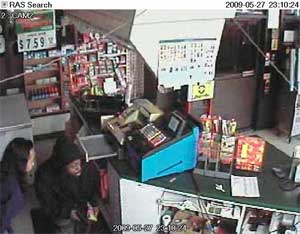
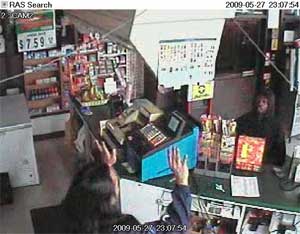
SOMERVILLE On May 27th at approximately 11:00 p.m., a lone The suspect is described as a young, If you believe you know the identity of |
|||||
Clean out your house or office while making a difference for local agencies in need Somerville "By helping to provide organizations with Visit supportunitedway.org/dayofaction Somerville agencies in need of supplies: Somerville Boys & Girls Clubs of Elizabeth Peabody House at 275 Broadway is in need of clothing To |
|||
By Steven Stafford The Commonwealth's unprecedented budget crisis is so deep that it is even beginning to affect basic security spending. The Middlesex County Sheriff's office receives a line-item budget from the Commonwealth, which can be changed at the Governor's discretion. And with the state government running a 2 billion dollar deficit, even these most important of funds risk being cut. Sheriff James DiPaola explained the problem is largely a result of the unpredictable nature of the excise tax, and not wasteful spending. "I've never overspent my budget," he said. The Attorney General will probably be taking over the Sheriff's offices, which the Sheriff believes will ultimately be a good thing. But the drastic drop in revenue due to the financial crisis has left law enforcement having to do more with less. Governor Patrick proposed an 8% cut in funding to the Sheriff's offices of the Commonwealth, and there have been rumors of a cut as much as 10%, a figure which Sheriff DiPaola has called "draconian." In contrast to these numbers, the Department of Corrections has received about a 2% cut. These cuts are especially hurtful because law enforcement budgets are personnel-driven. And, as the Sheriff points out, "it's especially tough on us because jails never close," DiPaola said. Prison overcrowding has already been a problem throughout Massachusetts for years, even in times of prosperity. The Cambridge jail above the courthouse was designed in the 1970's for 160 spaces; it currently holds 440 prisoners. In a controversial decision, the Sheriff even had to close its chapel to make room for more cells. The Billerica jail was built for 300, but may have to house as many as 1200 inmates. There are security concerns over adding 400 inmates to an older section of the jail built in 1929 that may be too old to be safe. Sheriff DiPaola has already self-imposed cost-saving measures, including restricting take-home vehicles, cell-phone usage and limiting the use of the 4-1-1 phone number directory service. But, unfortunately, DiPaola also has had to hold back on hiring forty new officers. He is currently lobbying the legislature to reduce the spending cuts. But until any legislative changes are made, the Sheriff has to get creative to find ways to save money. Energy costs have been one of the biggest drains on the budget; the Sheriff is now considering installing solar panels on the prison roofs. Transportation is also expensive; the Sheriff's Department vans transfer over 35,000 people a year, driving more than 1 million miles. DiPaola is trying to come up with ways of lowering these numbers. As with any financial crisis, there are worries that good, successful programs will be cut. Among DiPaola's many concerns is the survival of the Youth Public Safety Academy, a program for children between 10 and 12 to meet policemen, firemen, and EMS workers in a positive environment and get to know what they do for the community. DiPaola says it is a great way of giving kids good role models and building characters. But only time will tell if it will survive. DiPaola hopes that the recent decriminalization of small amounts of marijuana will free up law enforcement time, effort and money, in order to focus on more important matters. But during this difficult time, DiPaola will be meeting with the Governor and other political leaders to discuss short and long term plans for the Cambridge jail and other financial matters. It is clear that these meetings are deeply important for all of Middlesex County, and we will have to live with their results. Either way, we will pay a heavy cost, financial or otherwise. |
||||
| By Joseph A. Curtatone
(The opinions and views expressed in the commentaries of The Somerville News belong solely to the authors of those commentaries and do not reflect the views or opinions of The Somerville News, its staff or publishers.) Thursday night (May 28th) the Aldermen face the first in a series of very tough choices on the FY2010 budget. It's not the Aldermen's fault that this vote is necessary. They didn't create this fiscal crisis – in fact, their work in recent years has greatly strengthened Somerville's financial future. But neither they nor I can ignore the position we're in as a community. Simply put – and due largely to deep cuts in state aid and rapidly escalating health care costs – this city faces a budget gap (based on the latest information from the state) of roughly $13 million. If we do everything we can to manage costs and raise revenues – and if the state closes the telecommunications property tax loophole and green-lights local option meals and hotel taxes – it's possible for us to reduce our budget shortfall to between $5 and $6 million: We'd still be facing some difficult choices – including some layoffs and service reductions – but their magnitude would be significantly reduced. In order, however, to get to that "best-case" scenario of a budget shortfall that's only $6 million, we still need to take a number of strong actions, and we need to take them quickly. Several of those actions mirror recommendations made by the Financial Advisory Committee I convened last January. The FAC was charged with examining our existing policies and procedures and recommending ways to reduce costs and improve revenue. After a comprehensive review of the City's finances and municipal operations, the FAC concluded that the structure of our health insurance system was one of the areas in which Somerville could achieve significant savings with no loss of access or coverage. Some of those savings depend on the willingness of the state to give cities and towns more control over the design of local health care plans – but one of the specific recommendations within our control is to bring retiree health care costs more in line with what other Massachusetts cities and towns pay – not to mention bringing these costs more in line with what Somerville pays to insure its active employees. When I took office in 2004, every City employee and retiree paid for, at most, only 10 percent of their total health care costs. With health insurance costs rising fast, that system was simply unsustainable. As of July 1, Somerville's non-union workforce (including city side, school side and elected officials) pays 25% of the cost of its health insurance premiums – the City pays the other 75%. In our unionized workforce, the split currently varies from 85/15 to 80/20 – and we're working through the collective bargaining process to get everyone to move to the 75/25 share. So far, however, our retirees have not been asked to play any part in addressing this problem. They still pay only ten percent of the cost for their health care plans; for the so-called "indemnity plan" (the least efficient and most expensive plan for the city, but one that doesn't provide much preventive care) 203 of our 1255 retirees pay only one percent of the cost of their premiums. In fact, it takes the entire property tax contribution of six average residential taxpayers to cover the cost to the city of one indemnity plan. It's a system that can't continue in the face of the current fiscal crisis. the Board of Aldermen votes to require retirees to pay for 25% of the cost of their premiums (which is the norm for municipal retirees in Massachusetts), and if they also raise that share to 40% for the outmoded indemnity plan (thereby providing an incentive for retirees to move to a more efficient HMO or PPO – Preferred Provider Organization – plan), they can save the City $2.8 million per year without reducing access or coverage. I understand that this is a hard vote. We can all agree that dealing with this crisis will require everyone to make some sacrifices: wage freezes, furloughs, and higher health care costs for active employees (including elected officials); higher fines and fees for residents; and if necessary, cuts in services and staff layoffs. But when that spirit of shared sacrifice is extended to our retirees, it's not surprising that some aldermen are reluctant to make the call. So I will make the choice as clear and simple as I can: Since the budget situation at the state level won't be clear for some weeks to come, and since contractual requirements mandate a minimum of 30 days notice prior to layoffs – and since the new fiscal year starts on July 1st – I must begin sending out layoff notices on Friday, May 29th. The School Department will be doing the same. If the Board approves the retirees' insurance proposal, they will reduce the potential need for city-side layoffs, substantial service reductions and cuts by $1.4 million. The Board will also reduce the cuts needed on the school side by an equal amount. There is no "splitting the difference" on this – or any future – FY2010 budget vote. We need the full $2.8 million in savings from this proposal – and we need to press ahead with other measures as well, including the raising of fines and fees. Even then, we will still face a harsher fiscal environment in which some layoffs will be necessary. But with this change to retiree health benefits – and a number of others changes, including increases to fines and fees – we will be able to preserve core services at their current level. This isn't fun, folks. But it is the math. We are all going to have to do our part to get through this. Our Police and E911 unions have already agreed to contracts with zero percent wage adjustments and a one-week furlough – the same terms as non-union employees. They have increased the share they pay for their healthcare costs. Taxpayers have had to step up, too: they'll be paying more in fees and fines. Everyone has to do his or her part in order to maintain city services. Even, at long last, our retirees. |
|
| We here at Newstalk, along with the thousands of residents that saw The Memorial Day Parade, thought it was very successful. Frank Senesi and Mayor Joe predicted the parade would be the biggest one so far – and it was. Congratulations for a job well done to everyone involved and big congratulations to the DPW crews out on the streets immediately afterwards another job well done. *************** The **************** Another *************** Somerville Public School's **************** Funny *************** The *************** The Somerville Police **************** The who *************** We hear that West Somerville *************** Somerville *************** Traffic *************** The *************** Brazil *************** |
|
The Events These are difficult times, as we will all find out in the We have said it before and we will say it again – it The ultimate goal is to be free from the total reliance |
|||
| |
|||||||
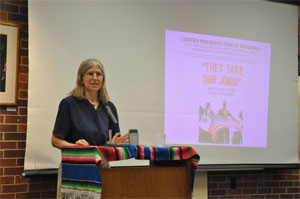
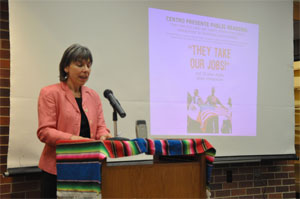
By Meghan Frederico Historian The book identifies and So are immigrants really a Dr. Dr. Chomsky also spoke compellingly about how the Ingrid During the question and State Observing The event was |
|||||||
















Reader Comments