Pages
Stay In Touch
More
© 2026 The Somerville Times. All rights reserved.

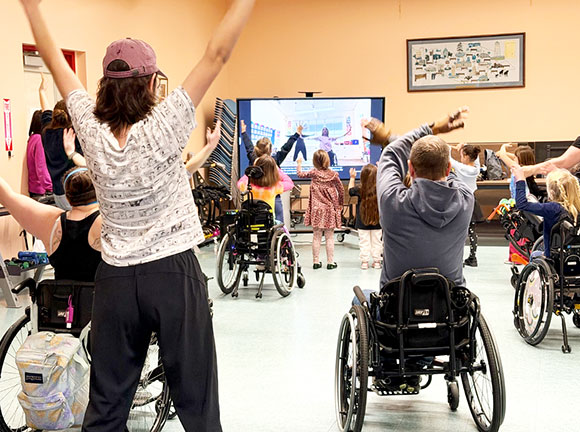
Everyone dancing to the K-Pop Demon Hunter song Golden. ~Photos by Keith Foster
By Keith Foster
The Somerville Commission for Persons with Disabilities hosted the first Inclusive Dance class at the Tufts Administration Building (TAB) on November 14 for people with disabilities. The event included both in-person and Zoom dancers.
Kaylee Bayes, the first wheelchair dancer from the FOX reality show So You Think You Can Dance, was the instructor. She has Ehlers-Danlos Syndrome (EDS), a multi-systemic, degenerative connective tissue disorder. She started dancing at three, was diagnosed at 21, and was told she’d never be able to dance again. That was not going to be her reality. She needed to find a way to dance, and she did.
Nicole Cannon, Associate Commissioner at the Commission for Persons with Disabilities (SCPD), who attends biweekly commission meetings and serves on the Events Committee, was in attendance. Her daughter knew about the event and was one of the dancers attending.
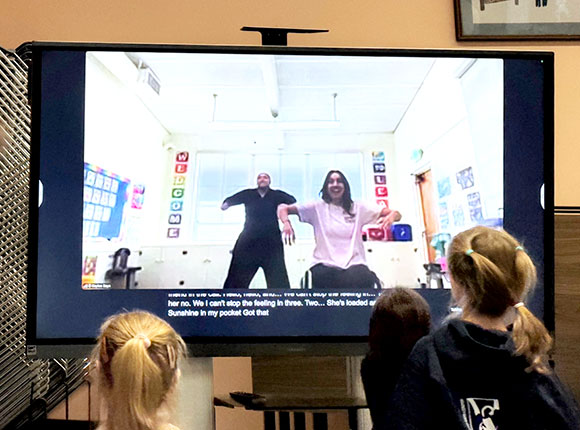
Bayes on Zoom with closed captions.
Mayor Jake Wilson was also in attendance. He was greeted and thanked for his support and presence at the event. The mayor said that the money for the class was made possible by people who illegally park in handicapped spaces.
The event was held to bring people of all ages and abilities together to dance. The Commission expressed its enthusiasm over growth, new ideas, and support from the Somerville Council on Aging and social media community members who helped to promote the event widely. Organizers hoped for strong Zoom participation, and they got it.
The class was a demonstration. Attendees learned basic dance movements to the chorus of the wildly popular K-Pop Demon Hunter song, Golden, which to this day has garnered nearly two billion views on YouTube.
After the class, Bayes was asked what inspired her to have this class. She lived on the East Coast for a little bit and saw how big the need was for a continuation of accessible spaces. As a dancer who “grew up not quite fitting the box,” she recalled being 11 years old, using a wheelchair, and being removed from her studio’s recital.
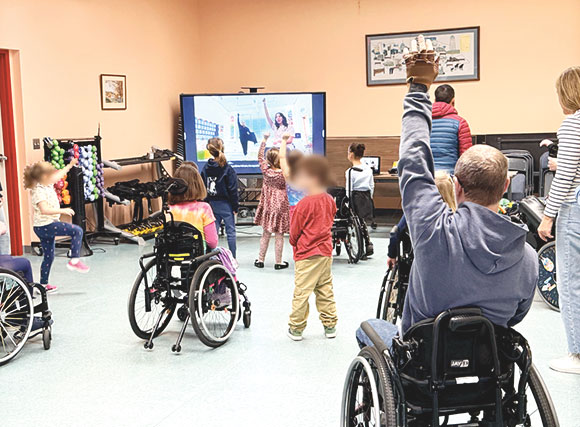
Inclusive dancers of all abilities.
Her disabilities have progressed. She now relies on her wheelchair for daily living. She sought a space to dance without fear or rejection and aims to ensure others are not only seen but also pushed and accepted. Her mission is to “never, ever, ever let there be another recital where a dancer doesn’t get to perform or have the opportunity to.”
Bayes is “forever growing” in her accessible offerings in teaching and is always “going to be a student.” The class originates from “a true need” she experienced as a child.