Pages
Stay In Touch
More
© 2026 The Somerville Times. All rights reserved.

(The opinions and views expressed in the commentaries and letters to the Editor of The Somerville Times belong solely to the authors and do not reflect the views or opinions of The Somerville Times, its staff, or publishers)
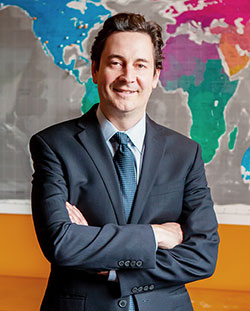
Sasha Chanoff. — Photo courtesy of Welcome.US
By Sasha Chanoff
A young mother named Mariam was on the Taliban’s hit list when they took control of Afghanistan during the U.S. withdrawal five years ago. (I’m using a pseudonym out of concern for the safety of her family members overseas). She had worked with the U.S. government promoting women’s rights. “I knew the Taliban would kill me and my family,” she said. “I had to escape to save myself and my three children and husband.”
They made it to Kabul airport, where she described chaos, explosions, and gunfire as thousands desperately tried to reach the evacuation flights: “My young daughter and I saw people shot down in front of us. I was begging the U.S. military guarding the gate to let us through. I thought we would die there. Then someone found my name on a list and they let us board.”
The U.S. airlifted Mariam’s family out along with some 76,000 Afghans to America – a historic marker of our country’s moral obligation to Afghans.
That obligation is sacred for veterans whose Afghan interpreters protected and sometimes fought and died alongside them. Veterans spearheaded special evacuations and brought their interpreters into their own homes and communities.
This same struggle to bring allies to the U.S. is Mariam’s now in a personal way. Her father worked with the U.S. Army, and the Taliban have marked him for death. He and Mariam’s mother hold Special Immigrant Visas – a pathway Congress created for wartime allies whose service placed them in danger – but they remain stuck overseas. “I wake up every morning scared they won’t survive,” she said.
Representative Michael McCaul (R-Texas), the former chairman of the House Foreign Affairs Committee, implored Congress to help allies like them in a House floor speech: “There is a saying – no man left behind, no one left behind. That is the promise we made to the interpreters, to our Afghan partners. They have a bullseye on their back. They will be killed if we don’t get them out of there.”
In addition to Mariam’s parents, thousands of others have been left behind. As a result, some veterans have suffered from a particular kind of Post Traumatic Stress known as Moral Injury – feelings of helplessness, betrayal, shame, and guilt that the US government has abandoned allies to danger and death. It has contributed significantly to veteran suicides.
The betrayal of these Afghan allies is most visible at Camp As Sayliyah in Qatar, where more than 1,000 fully vetted wartime allies – most of whom have already been approved for U.S. relocation – have been stranded since being evacuated from Afghanistan. A bipartisan group from the Senate and House has written to the Secretaries of State, Defense, and Homeland Security, asking that all eligible families be brought to America quickly. The Trump administration has considered other options, including sending them to the Congo, where there is an Ebola outbreak – an idea dropped after backlash.
But many Afghans already in the US aren’t safe either. Some have been detained at routine immigration appointments, and a combat veteran who served alongside U.S. forces for over a decade recently died in ICE custody. Now deportation flights are starting. The veterans’ advocacy group #AfghanEvac has been sounding the alarm – issuing urgent warnings to Afghan allies to seek legal representation and know their rights if approached by federal authorities.
This climate of fear stands in stark contrast to the sanctuary they were promised. Mariam’s own story shows what’s possible when America keeps its word. RefugePoint, an organization I started in 2005 that partners with refugees to find life-changing solutions, was part of the coalition that launched the Sponsor Circle Program for Afghans – an initiative enabling every-day Americans to directly sponsor families.
Mariam was evacuated to Fort Dix, New Jersey, where the program connected her with sponsors in Massachusetts. One of them, a retired business leader, says the connection became “a wonderful, rich relationship that is a blessing in my life.”
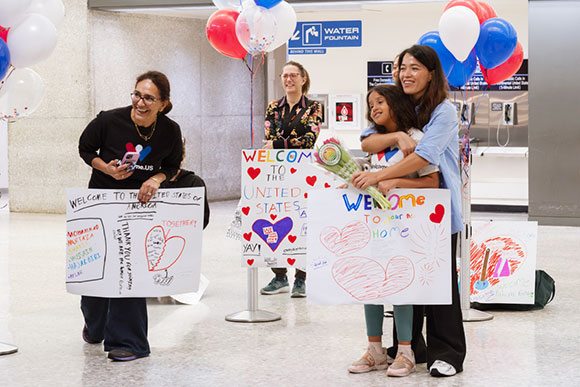
American sponsors welcoming Afghans. — Photo by Katelyn King
Sponsors helped America successfully welcome and integrate tens of thousands of Afghans. Since then, over 2.4 million Americans in all 50 states and 26,000 zip codes have welcomed Afghans and others – including in my home city of Somerville.
Mariam now works at a tech company. Her husband, a dentist, works in his profession, and her oldest son is almost finished with college. “We contribute to our community here,” she told me. “My oldest son even started his own company.”
Today we have a chance to live up to our promise – no one left behind. Call your representatives and ask them to pass the bipartisan Afghan TPS Act, which would protect Afghans already here from deportation and let them keep working and supporting their families. Ask them, too, to press the administration to resume the SIV and resettlement programs for those most at risk, starting with Mariam’s parents and the families stranded in Qatar. If you want to do more, consider joining or supporting a sponsor group in your community.
Our Afghan allies put their lives on the line for our troops. Now it’s our turn to stand up for them.
Sasha Chanoff is the CEO and Founder of RefugePoint, a humanitarian organization that partners with refugees for life-changing solutions, and the co-author of From Crisis to Calling: Finding Your Moral Center in the Toughest Decisions. Follow him on LinkedIn.