Pages
Stay In Touch
More
© 2026 The Somerville Times. All rights reserved.

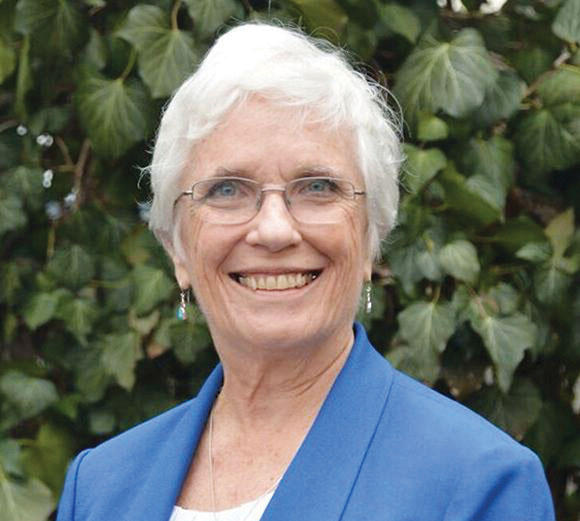
Retiring Senator Patricia Jehlen recently spoke candidly about her endeavors and accomplishments in the State Senate.
By Claire Q. Wood
Massachusetts State Senator Patricia Jehlen will retire at the end of this term following over 20 years in the Massachusetts Senate. Jehlen represents the Second Middlesex District, comprising Somerville, Medford and portions of Cambridge and Winchester. Before her time in the Senate, Jehlen served in the Massachusetts House of Representatives for over a decade and on the Somerville School Committee for 15 years.
Jehlen studied history at Swarthmore College and began her career through AmeriCorps VISTA.
“I served in Chicago Heights, Illinois, with … people who had been migrants and were settling down, and that was my first real experience thinking about poverty,” Jehlen said.
It was the middle of the Vietnam War, and Jehlen was weighing how to best serve her community.
“I said, ‘What’s the best way to change the world?’” Jehlen ultimately decided she wanted to “be an educator and work with young people.”
Jehlen received a Master of Arts in Teaching from Harvard University and began teaching at Brookline High School.
Working in education and seeing her children go through the Massachusetts education system, Jehlen decided to run for local office. This was during Somerville’s reform movement, and Jehlen had been involved in various reform campaigns.
“I’d been involved in a lot of local organizing,” Jehlen said. She had been organizing for the choice program and decided to run for the Somerville School Committee.
“I ran. I won. We got choice. We evaluated the superintendent for the first time. We hired a new superintendent,” Jehlen said. “But one of the biggest things that happened is I found out Somerville was spending half of what neighboring communities were on schools and paying taxes that were twice as high.”
This revelation about school funding led to Jehlen forming the Council for Fair School Finance.
Jehlen remained dedicated to funding education and, in 1990, decided to run for the Massachusetts House of Representatives so she could make a larger impact. The court suit she initiated through the Council for Fair School Finance succeeded in 1993.
“We were required to equally cherish all public education for all kids, and we passed the 1993 ed reform, and that brought a lot more money into public schools across the state, particularly into low-income communities.”
Jehlen later ran for the Massachusetts State Senate in a special election. She was elected in 2005 and has served ever since. Jehlen has found her time in the Senate to be where she’s had the largest impact.
“There [are] only 40 people. You could make a bigger difference,” Jehlen said.
Jehlen has written many bills and served on many committees in her time in the Senate.
Jehlen has served as Chairperson of the Joint Committee on Aging and Independence, Vice Chair of the Joint Committee on Education, and Vice Chair of the Joint Committee on Revenue. She has also been a member of the Joint Committees on Cannabis Policy, Labor and Workforce Development, and the Judiciary.
Jehlen is proud to have witnessed and been part of many key transformations, including legalizing equal marriage. In fact, equal marriage was a big conversation topic during her Senate campaign.
“The Supreme Judicial Court had legalized equal marriage, and it was still a very live question,” Jehlen said. “So when I ran, I talked about it. I said, ‘I’m in favor of equal marriage,’ and everybody else didn’t. And I won, and I think that encouraged my colleagues to say it’s not dangerous to support equal marriage, so that was a way that unintentionally I contributed to that.”
Jehlen has also been very dedicated to criminal justice reform.
“I had a constituent write to me about his friend who was dying in the hospital, guarded all the time, shackled, with two guards paid full time to watch him when he couldn’t get out of bed.” With regard to the death penalty and the existing criminal justice system, Jehlen said, it’s “not just inhumane—it’s expensive.”
She was inspired by the case of Lawyer Johnson, who was wrongfully convicted in 1972.
“[He was the] last man on death row in Massachusetts, got out, had nothing. No compensation, no place to live,” Jehlen said. “I thought, that’s not right.”
In 2004, Jehlen passed legislation compensating victims of wrongful convictions.
“That’s probably the biggest bill I passed when I was in the House,” Jehlen said. Now, in the Senate, Jehlen continues to advocate for criminal justice reform.
Jehlen has chaired the Joint Committee on Aging and Independence, formerly Elder Affairs, for the majority of her time in the Senate.
“There’s more money going into home care. There’s more money going into nursing homes too. And then in the last session we passed two bills. We have one this year: nursing home reform and assisted living,” Jehlen said. “We also passed a bill last session to create a path towards long-term care insurance that everybody would pay in, and everybody would get to pay out. There’s going to be a long-term services and supports commission to design it, and then hopefully the legislature will pass it because right now most people can’t afford to get old.”
Jehlen mentioned “having adequate and equitable revenue” as a key but relatively unknown struggle. “We are underfunding a lot of things,” she said.
A number of things have changed throughout Jehlen’s governance, including what it looks like to be a woman as a legislator.
“When I got to the House, men had a bathroom right outside the chamber, so they didn’t have to be in public or anything and be seen. They could walk into a private area, but women had to go to a different one,” Jehlen said. “Not only is there a women’s room [now], … but at one point the women’s caucus went and met with the speaker and said, ‘We’ve noticed that women are not proportionally represented in leadership; they do not chair committees.’ And the speaker said, ‘Oh, I don’t see gender.’ That has really changed.” Now, the President of the Massachusetts State Senate is a woman.
The demographics of the Second Middlesex District have also transformed throughout Jehlen’s time as its representative, but she has found that her values still align very closely with the community.
“My core values are very similar to what most people here think and feel,” Jehlen said. “It’s not hard to speak for them because I agree with them.”
And when asked what she loves most about Somerville, Jehlen simply said, “The people.”