
Pages
Stay In Touch
More
© 2026 The Somerville Times. All rights reserved.

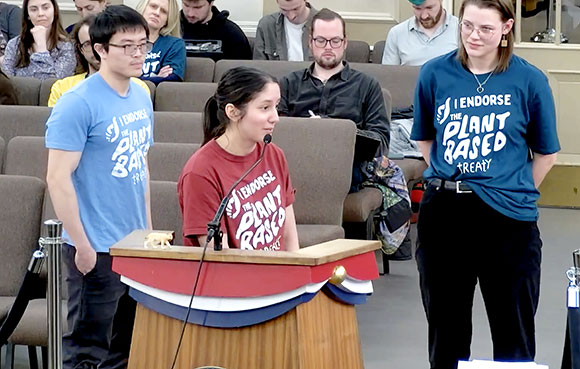
The City Council passed a resolution in support of the Plant-Based Treaty, which addresses current food systems causing environmental destruction.
By Harry Kane
In the latest effort to reduce greenhouse gas emissions and combat the negative impacts of a climate crisis affecting the planet, Somerville approved a resolution in support of a global initiative that seeks to incentivize and promote a plant-based food system.
The Plant-Based Treaty urges individuals, groups, businesses, and cities to acknowledge the need for food system reform that will reduce food-based emissions and promote plant-based purchasing practices.
“This resolution calls on the mayor to incorporate plant-based solutions into Climate Forward,” said Ward 5 City Councilor Naima Sait, lead sponsor of the resolution, during the City Council meeting on April 9.
Climate Forward is Somerville’s community climate action plan that aims for net-zero emissions by 2050.
The Plant-Based Treaty was launched in August 2021 “to promote a shift towards a just, plant-based food system” and is a companion to the UNFCCC Paris Agreement, according to their website.
By signing the Plant-Based Treaty, the city will be joining municipalities around the world in halting the expansion of animal agriculture in the hopes of mitigating the impacts of the climate crisis.
Research shows that plant-based diets have a fourth of the environmental impact of high-meat diets, according to the resolution. The initiative aims to improve health benefits for all citizens of Somerville, and it hopes to improve global sustainability by reducing pollution and greenhouse gas emissions, preserving water resources, improving soil health, and promoting more efficient land use.
Somerville’s endorsement marks the 7th U.S. city and the 70th city to globally support the initiative. As part of the process for implementing the initiative, the resolution requests the city to promote “Somerville Plant-Based Restaurant Week” that will highlight local restaurants offering plant-based options.
“Supporting the Plant-Based Treaty will build on Somerville’s broader climate goals; it will help raise awareness around environmental and health benefits,” said Councilor Sait.
Three local advocates were sponsored and testified before the City Council in support of the initiative.
“The Plant-Based Treaty is a global grassroots initiative addressing the environmental impacts of our food systems by working toward three main goals at the global level,” said Veronika Potter, a member of the organization.
The three core principles of the treaty aim to redirect animal-based food systems to plant-based ones, relinquish the use of additional land for animal agriculture, and restore key ecosystems, she explained.
Potter says she hopes Somerville will reach these goals by encouraging plant-based foods as the default option at city events. She later stated, when questioned, that this resolution does not ask residents to abstain from eating meat, but instead looks to shift away from animal agriculture without imposing specific restrictions.
Ward 7 City Councilor Emily Hardt thanked the sponsored speakers from the Plant-Based Treaty organization and said she supported this effort.
“Over the past few decades, animal agriculture in the U.S. has become more and more concentrated and industrialized with the goal and effect of producing profits for some of the largest multinational corporations in the world,” said Councilor Hardt.
To transfer to more sustainable food production and greater food security, Councilor Hardt said, the way forward is to consume less industrially farmed meat and eat more plant-based foods.
Councilor Wilfred N. Mbah, co-sponsor of the resolution, said this initiative is a “no-brainer.”
“Supporting the Plant-Based Treaty is about aligning our local actions with global urgency,” said Councilor Mbah. “By promoting plant-based options, we are not asking for perfection. We are creating opportunities for residents, institutions, and businesses to make more sustainable choices that collectively have real impact.”

















Reader Comments