
Pages
Stay In Touch
More
© 2026 The Somerville Times. All rights reserved.

Eagle Feathers #334 – ‘Casey at the Bat’
By Bob (Monty) Doherty
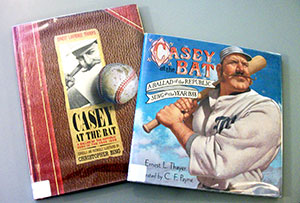
“Oh, somewhere in this favored land the sun is shining bright, the band is playing somewhere, and somewhere hearts are light, and somewhere men are laughing, and little children shout; there is no joy in Mudville/mighty Casey has struck out.” So goes the last stanza of the fictitious poem Casey at the Bat. It is regarded by most as the most famous baseball poem ever written. August 14 is the 150th anniversary of the birth of the poem’s author, said to be Earnest Lawrence Thayer. Born in Lawrence, the son of a wealthy mill owner, he went to Harvard. After graduating, he traveled west to work for his college friend William Randolph Hearst at his San Francisco newspaper. Thayer later returned east to run his father’s Worcester woolen Mill. This is where it is said he wrote the poem, and then sent it and other articles to Hearst. Casey at the Bat was published in June 1888.
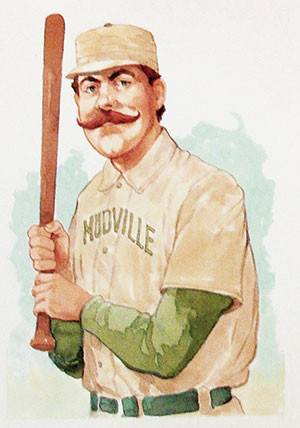
As far as the poem, Casey at the Bat, Somerville has a more intimate relation. Many newspapers and many authors have claimed the authorship of the poem but a Somerville man named George Whitfield Dvys was the longest-lasting claimant until the contesting stopped after many years. According to Dvys (City records list his occupation as a writer and correspondent), he was inspired to write the poem while at a ballgame with friends at Franklin Park in Boston. He returned to his Somerville home on Houghton Street and wrote eight stanzas, the last eight stanzas of the existing poem. Other people later added five more. He then sent a copy to the New York Sporting News which printed the poem changing only two words (1) Casey to Kelly and (2) Mudville to Boston. This was in reference to the popular King Kelly the Boston superstar of baseball at that time.
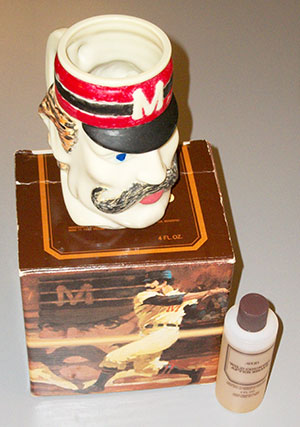
It was only a poem written obscurely in a newspaper until the right person noticed it. After taking in a baseball game at the Polo grounds on August 14, 1888, William De Wolf Hopper a New York Opera Company actor came across the poem through a friend. He performed a reading of it at the Broadway Opera House in New York City, and it was a booming success. Hopper was born to narrate that poem, and he proved it by reciting it in his own estimation over 10,000 times during the following 12 years. Casey at the Bat made the actor Hopper famous, and Hopper made Casey famous.
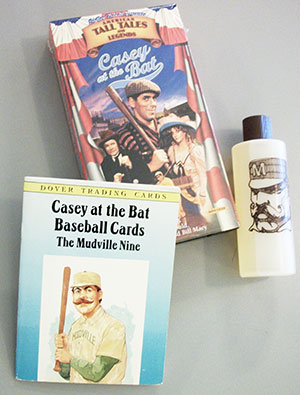
Through the years that poem became and still is a classic. It was made into a silent movie in 1927 starring Wallace Berry, a Disney film in 1946, Shelley Duvall’s 1986 movie, Tall Tales and Legends, starring Elliott Gould, and in 1994 Garrison Keillor of Prairie Home Companion and Lake Wobegon fame engaged a parody of it. New York had its Casey Stengel, baseball player and coach. L.A. has its Casey Kasem, the Top American 40 disc jockey, and Cambridge has the memory of Crusher Casey the world- champion wrestler. What is Somerville’s kinship with the poem? Somerville has its Mudville Pottery Studios at Pearl Street and McGrath Highway. On Broadway in East Somerville, you will find Casey’s Irish Tavern with its colorful Casey at the Bat logo on its marquee. Also, Somerville boasts another Casey, famous actor Casey Affleck, brother of actor/director Ben Affleck.
Writers, lawyers, readers and fans took their sides, some thinking it was a David and Goliath, rich man poor man contest while others thought it was more of an ashes to riches “want to be.” Either way, the next time you’re driving down Broadway in Somerville past Casey’s Irish Tavern with its colorful Casey at the Bat logo on its marquee, it will leave you thinking, which (author) team really won?

















Reader Comments