
Pages
Stay In Touch
More
© 2026 The Somerville Times. All rights reserved.

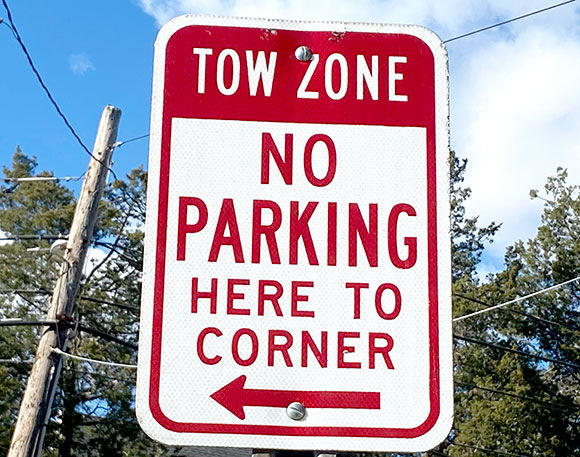
A “No Parking Here to Corner” at Walnut Street and Sunnyside Avenue was deemed unnecessary by Director of Parking Suzanne Rinfret, advocating instead for stricter parking enforcement. — Photo by Bobbie Toner
By Jordan Pagkalinawan
The Traffic and Parking Committee met on Monday, October 27th, to discuss various speed control measures and debate several issues related to the testing of autonomous vehicles.
Walnut Street “No Parking Here to Corner” Sign
The committee first heard from Director of Parking Suzanne Rinfret, who explained a work order to evaluate a request for a “No Parking Here to Corner” sign at Walnut Street and Sunnyside Avenue. After the department frequently checked the intersection and noticed only three tickets issued between October 24 and 27, Rinfret said such a sign would not need to be installed.
Instead of a sign, Rinfret said the first step would be to enforce the law more often, so people would be used to not parking within 20 feet of an intersection.
“We would like to continue with that, and if we don’t see a change in behavior or we see the situation getting any worse, we can certainly add a sign,” Rinfret added.
Proposed traffic calming measures
Director of Mobility Brad Rawson then addressed the committee to evaluate two orders related to traffic calming requests.
The first order requested a speed bump along Ashland Street near John F. Kennedy School, where residents signed a traffic calming petition after a pet was killed by a speeding vehicle. Rawson directed the pet’s owner to the city’s online resources for traffic calming requests.
He also explained the department’s standard process of collecting data on “the number and speed of motor vehicles on a given street.” Such an evaluation will be given to Ashland Street next spring, according to Rawson.
“Once we have the data, our staff will … communicate in writing with petitioners and neighborhood residents,” Rawson said. “On the city’s traffic calming webpage, folks can find written responses [and] technical memoranda that we provide to petitioners, so they can see how their street stacks up against other candidates.”
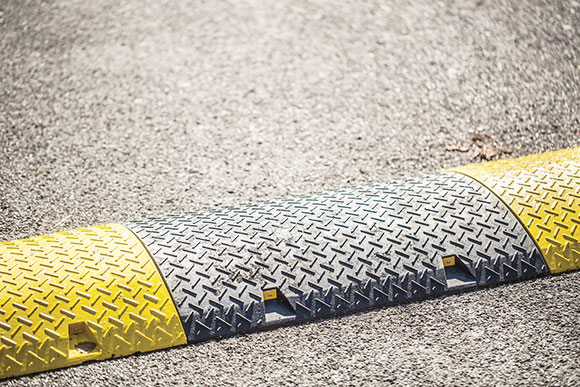
The Traffic and Parking Committee is considering further traffic calming measures throughout the city.
The second order was to install a solar-powered digital “Your Speed Is” sign on the westbound portion of Shore Drive. Rawson said that the city staff had collected data and worked with Ward 4 Councilor Jesse Clingan and local residents. However, he noted such a sign would not be considered at this time, especially with raised intersections being present at Shore Drive and Putnam Road.
“I think it’s important to remind constituents and councilors that a speed feedback sign can be a helpful intervention, but typically, they are less helpful than physical traffic calming [measures], like raised-table intersections,” he said.
Rawson added that the sign would conflict with a “large-scale capital project” with the Mystic River Watershed Association, which would rebuild elements of Shore Drive with attention to vehicular speeds. The digital sign would be covered by new trees and water planters, but Rawson said he is willing to work with Councilor Clingan on another solution.
Autonomous vehicle testing
The meeting’s final four items were taken up together and related to autonomous vehicle testing, including potential bans or restrictions if permitted by law.
Special Counsel Catherine Lester Salchert said that while the city can restrict autonomous driving within city limits, several pending state and federal bills would preempt municipal regulation.
“We have this ability right now. It could go away,” Salchert added. “A ban would most likely be challenged, even though [AV testing] hasn’t been banned yet, the state has, in a sense, occupied the field. They’re handling it on a state level and they’re allowing a little bit of room for municipalities to be involved.”
State officials, according to Salchert, are still collecting data around autonomous vehicle testing to understand the “lay of the land” in each city.
In explaining his decision to put these four items on the table, councilor Willie Burnley Jr. pointed to Waymo’s past testing of autonomous vehicles in the Greater Boston area, where the company operated its vehicles with drivers behind the wheel in an effort to map the city’s roads. He sought to bring in accountability measures, considering the construction of Boston’s streets and the behavior of the city’s drivers.
Addressing his colleagues, Burnley added: “If we want to move forward with some specific restrictions, based on the attorney’s input, we should move quickly to do so.”
Rawson noted that city staff had worked on this issue for years, including contacting other cities to understand the testing’s benefits and drawbacks. While autonomous vehicle testing can improve key outcomes in transportation, it can also lead to various concerns, similar to those brought up in the advent of ride-sharing services in Massachusetts.
“These industries tend to result in net increases in vehicle miles traveled,” Rawson said. “And so, congested streets in places like metropolitan Boston can become that much trickier for many of our day-to-day requirements and realities.”
Rawson added that the Somerville Fire Department and Assistant Chief Sean Tierney have worked with the Department of Mobility to understand how emergency medical services should interact with autonomous vehicles. He also highlighted the national praise the state has received for a balanced regulatory framework around AV testing, which includes “protecting the public interest, fostering innovation, and allowing for private investment and scaling.”
“It’s going to be important for Somerville and for many other cities and towns in the Commonwealth to continue to have access through that regulatory framework,” Rawson said.
He also echoed the importance of transparency with the public, citing past misunderstandings around surveillance management: “If this conversation continues and we anticipate any additional steps in the future, Somerville staff will be sure to follow up and make sure that we [have] communications protocols for the city council and for the public at large.”
















Reader Comments