
Pages
Stay In Touch
More
© 2026 The Somerville Times. All rights reserved.

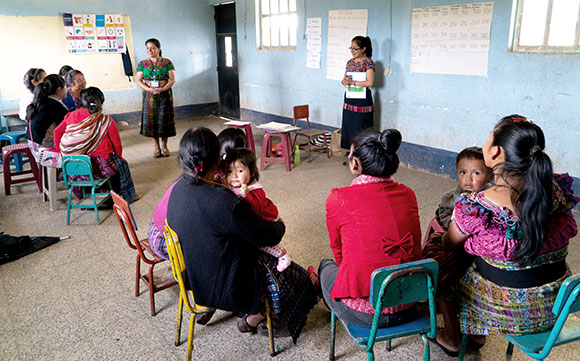
Somerville-based non-profit Mil Milagros has been helping Guatemalan women to become leaders in their communities. — Photos courtesy of Mil Milagros
By Alaa Al Ramahi
In Guatemala, the average number of years that an Indigenous woman has an education is three. Mil Milagros, a Somerville non-profit organization, has been supporting women in Guatemala to change that and become leaders in their communities.
Founded in 2007, Mil Milagros works to implement programs for leadership, early childhood development, health, and education. Through these programs, women are learning valuable and long-lasting knowledge, like how to become leaders in their communities, how to create a healthy environment for children, public health campaigns, and the significance of literacy. After finishing these programs, these women will, in turn, teach other women, creating a cycle of change in their community.
Current executive director, Carolyn Daly, started working with Mil Milagros in 2013. She worked in Sololá, Guatemala, as a Peace Corps volunteer, which is when she first heard of Mil Milagros. At that point, the non-profit was only working with kids in schools and new moms. Since then, the program has grown to include all women and children.
The non-profit has a three-year structure. In the first year, women are inspired to make decisions for themselves and let men in their lives make the decisions. The second year is where women learn about different types of contraceptives and choose what happens to their bodies. They are also given the chance to work with a medical partner to help guide them. In year three, women learn about child development and how to support children in growing and learning.
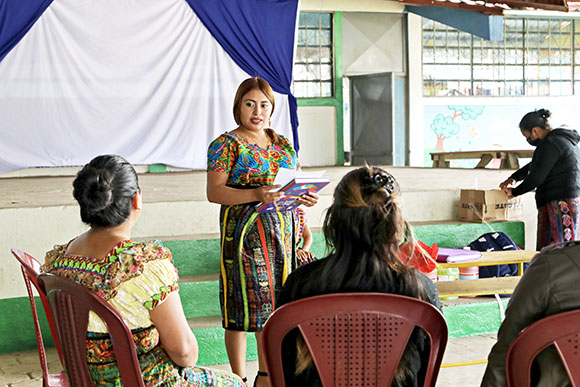
Once this three-year process is completed, women who participated in the program are given the opportunity to join as staff members to be Community Coordinators. As Community Coordinators, they use the skills and knowledge they learned to inspire and empower the change they want to see in their communities. They use these opportunities to train other women and run different kinds of campaigns in Guatemala.
“Some of these women did not graduate from elementary school, and yet they are on our staff now,” Daly said.
An example of what Community Coordinators did was initiate an evaluation process in schools. This was pushed by the fact that 40% of third-graders in Guatemala read on grade level. The evaluation was meant to see what teachers are doing and what students are learning to give them feedback. Now, 79% of students in this program were reading on grade level because of the plan that mothers were carrying out for classrooms.
“The average number of years of education that an indigenous woman has is three and yet these same indigenous women are training the teachers in their schools to implement these different educational programs,” Daly said. “It’s absolutely incredible.”
Mil Milagros also helped fund books and supplies that schools may need to further promote literacy for their students and a strong educational environment. They ensured that 100% of children at local schools have access to clean water and hygiene supplies.
“Our job as kind of the leadership staff is to just absolutely show them that this is something that they can do,” she said, “If it were me or some of the other leadership staff just doing everything on our own and telling them what to do, they probably wouldn’t get up the nerve to do it.”
Mil Milagros strives to inspire and teach women what they are capable of doing so they may inspire other women to do the same. Daly believes that taking care of other women and children is like second nature to women, and Mil Milagros just gives women the tools to do it on a larger scale.
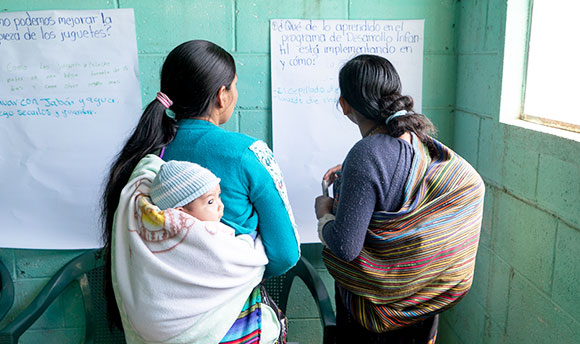
“It’s kind of that mix of you just showing them that they know what to do and they already know what to do,” Daly said. “And we are going to give you some classroom training to help build up your skills.”
Daly remembers a particular mom from her early days of the program whom she calls Rosa. Rosa never went to school but was still able to become the biggest leader in her community. She would help Mil Milagros spend the money from fundraisers to provide fresh meals for students and would convince other women to help make the food. Being an outsider from the US, Daly noticed that the way to help create change in Guatemala is to simply make the ingredients needed for change more accessible for women.
“Being somebody from the U.S. in Guatemala making these changes, it’s not sustainable,” Daly commented.
Because Rosa didn’t go to school, she had some friction with teachers at first. She convinced the teachers by telling them that these were her children and she wanted to create better learning conditions for them by working with the teachers.
There are currently only three staff members in the U.S., two in Somerville and one in D.C. The majority of the work that gets done is done in Guatemala. The staff in the US are responsible for fundraising for supplies and raising more awareness.
“It’s not me imposing my will and whatever I want to have happen in Guatemala,” Daly said. “It’s Guatemalans doing what they think is best and me trying like heck to raise funds for it.”
This year, Mil Milagros plans on doing a match campaign this year for their annual fundraiser, focusing on two women, Vilma and Beverly, who experienced the program and eventually became staff members. They were planning on migrating to the US for a new life because they felt like they had no other choice. However, Mil Milagros helped them find a new future for themselves in their hometowns. The money from donors will help show indigenous women of Guatemala that they do have a choice to stay in Guatemala and create a better life for themselves.
“Personally, it helped me so much because they always, always focused on the value of a woman–a woman is capable, a woman is worthy – and because of that, I started to say: ‘It’s true that we can do things,’” Vilma said. “Each time I returned from a session, I felt happy and I said to myself, ‘I’m going to keep participating, I’ll keep going.’ And I felt that I started to see a change in myself, in my motivation.”
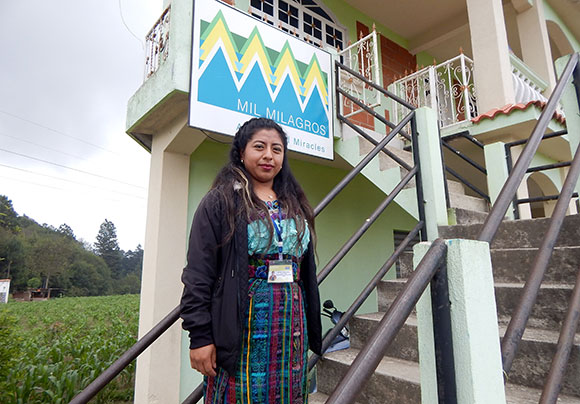
Vilma was not alone in this. Beverly noticed that before joining Mil Milagros, she was very shy and kept to herself. Afterwards, she began expressing herself and believing in herself more, especially when she realized she was not alone. Becoming more confident, Beverly learnt more about how to become a leader and be there for other women in her communities.
“So, working in the different communities, I feel empathy with them and from them, too. They also need to feel heard and understood. When we visit their homes, sometimes we arrive at a difficult moment for them, but they still open themselves up and express how they are.”
Beverly said. “Maybe we don’t know them well, but they still share what they’re going through, and it makes me feel satisfied that I can help them. I think that is one of the goals that I have, to help others as I have been helped.”
These women are only two of the many indigenous Guatemalan women who are contributing as active members and leaders in their communities. The women in Mil Milagras have reached over 40,000 women in rural Guatemala each year through programming.
“More than anything in the world, I think we need to be cheerleaders. We need to really support these women,” Daly said.















Reader Comments