


Pages
Stay In Touch
More
© 2026 The Somerville Times. All rights reserved.


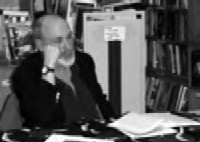
By Doug Holder Well I tried. I spoke to the politicians. They told me they were working on it: speak to this guy, speak to that guy, they said. But my quest to get a poet laureate for Somerville seems to have hit a serious roadblock. Nothing's happening. So I went across the Charles River to speak to Boston's Poet Laureate Sam Cornish. When I lived in Brighton in the 1980s I used to see poet Sam Cornish walking down Commonwealth Avenue. With his thick glasses, powerful stride, and intense stare, I thought to myself, "This cat means business." I never approached him, but I knew of his reputation as part of the "Boston Underground" school of poets, and knew he taught at Emerson College. It wasn't until he was appointed to the position of Boston Poet Laureate that I actually met him, and now our paths have crossed more than a few times. Cornish, 73, was born in Baltimore, Maryland, and for a long time commuted between his native city and Boston. He was a poor kid, raised by his mother and grandmother after his father died. He was influenced by the small press movement in poetry, as well as the Black Arts Movement, but basically he has been viewed as a poet who is hard to classify. His poetry deals with slavery, civil rights, as well as pop culture: from Louie Armstrong to Frank Sinatra. His poetry is usually stripped down and potent. Cornish's breakthrough book of poetry was "Generations" published in 1971. The book is organized into five sections: Generations, Slaves, Family, Malcolm, and others. He combined his own family with figures from African-American history. Cornish received a National Endowment for the Arts Award in 1967 and 1969, he was the literature director at the Massachusetts Council of the Arts, and owned a bookstore in Brookline. He has a number of poetry collections under his belt, the most recent: "An Apron Full of Beans" (CavanKerry). I recently spoke with Cornish on my Somerville Cable Access TV Show: "Poet to Poet: Writer to Writer." Doug Holder: Sam, you told me that you did not consider yourself to be part of the Black Arts Movement in the 60's and 70's. Yet I have read in a few places that people consider you an "unappreciated" figure of the movement. How would you define yourself? Sam Cornish: What might distinguish me from poets of this generation in the movement, folks like: Sonia Sanchez, Niki Giovanni, etc., was that I was influenced by a number of writers and sources that may not have been part of the influence and education in the Black Arts Movement. Some of the poets in the movement came from a conventional Negro background. The Negro middle class: doctors, lawyers, and teachers. I came from a poor family, raised by my mother and grandmother. My mother was forced to go on welfare when she could no longer work. I went to a neighborhood school and frequented the public library. I bought books and as a result became interested in poetry. The poets that moved me were T.S. Eliot, Langston Hughes, prose writers like James T. Farrell and Richard Wright. As an adolescent I loved Farrell's character, Studs Lonegian. I could identify with him and I was motivated to find other books that I could identify with. I read books by George Simeon, the great French writer of psychological murder mysteries, for instance. DH: Who published many of the writers of the Black Arts Movement? SC: The Broadside Press. It was a small press that was based in Chicago. It was started by a man named Dudley Randall. They were publishing young black writers who were very militant and defined themselves as being "Black" rather than "Negro." There was a very strong political stance to them. DH: Didn't you have a strong political slant to your work? SC: If I did it was politics that grew out of the 1930's. That was a mixture of left leaning, the communist and the socialist. DH: This was in contrast to the militancy of the 60's? SC: Yes. Because a lot of that was directed at whites generally. It was confrontational or abrasive. You were now black and different from previous generations. You had no patience with your forefathers, your parents, those who were living as negroes. It was a very angry and self-destructive ideology. People like James Baldwin, Langston Hughes, and Robert Hayden were viewed as not being pro black. DH: Your poetry seems to be stripped down rather than weighted with ornate flourishes. SC: For me it is a choice of language. How do you describe something? How do you create a poem? How do you communicate? I would say that it is the influence of the hard world or the naturalistic writer, where you use the language that's employed in common speech. At the same time you recognize the lyric possibilities in this language. I have had my days when I had tons of words on the page. I realized though that it was necessary to use fewer words. DH: You told me that a poet should reveal something about himself in a poem? SC: I'm back and forth about that. There are poems where you can't find the poet. There are novels where you can't find the writer. I just feel very strongly that it is important to present yourself as honestly as you possibly can. Hold yourself up as a mirror people can see their selves and vice a versa. Poetry does provide an opportunity for people to hide themselves behind the language. They use the poem as a form of escape. And that's OK as a form of entertainment. DH: You have talked about the photographer Walker Evans, who used to hide a camera under his coat, and snapped pictures of people that truly captured the moment, on the New York subway for instance. Should a poet be Walker Evans-like? SC: For me perhaps. But maybe not for others. I like the idea of interacting with people–different kinds of people. DH: So you must have been an admirer of the late Studs Terkel? SC: Very much so. He transcended the genre. DH: Your breakthrough poetry collection was "Generations" published in 1971. How was it a breakthrough? SC: It might have been a breakthrough because the number of black writers being published at that time were few. The Beacon Press of Boston published it. As a black writer there may have been anger in the book. It was not an anger directed at white America. It attempted to describe living in an America that is black and white, and all the other things that go with it. The book is arranged like most of my books are: from past to present. It begins with a slave funeral and it ends with a sense of Apocalypse. The history comes from things I heard from home, and things I picked up from the neighborhoods, not to mention popular culture. DH: We have discussed Alfred Kazin's memoir "A Walker in the City." Kazin was inspired by pounding the pavement on the teeming streets of New York City. How about you in Boston? SC: I used to walk with a pocket camera, and took pictures as I walked. I would al so walk with a notebook. I would describe things I would see, and imagined them as little scenarios. That was an important part of my day. DH: I get the impression that you are the consummate urban man. Could you survive in the country? SC: If I did live in the country I would like the freedom to move back and forth. I like to be near theatres, bookstores and cinemas.<
br /> SC: Publication. The major presses publish very few books of poetry. They also have a fixed standard as to what they select. So you often get the same voices. The small press allows us to have a variety of voices. It allows us to be challenged, upset, disturbed and sometimes angered by what we read. The major press' books are pleasant and fun to read. But they are not disturbing. They are basically not truthful. The small press has novelty, surprise, can be violent, and sometimes it can be damn good poetry. DH: What are your goals in your position of Boston Poet Laureate? SC: Right now I am available for people through the library and also through Mayor Menino's office. If people call and request my presence at a school or senior citizen's center, or where people would like a poet, I go. I try to be the person to bring a poem to people who might not read poetry, or those who want to talk to a poet about the craft. The South Was Waiting in Baltimore Ruth Brown sang bad songs about her brown body but I could see white boys hit the nigger streets saw them running through the projects looking for colored girls the Fifties were marching integrating schools young Richard Nixon barbers standing in the doors of their shops saying shame shame at the sight of my hair Negro men scratched their heads burned their hair to make it good like Nat King Cole Emmett Till died in Mississippi his picture in JET Magazine his death a word on the streets I never went to Mississippi during the bus boycotts nor sat in for civil rights and hamburgers I was poor even then my shoes were holes held together by threats & good luck but I read Camus & listened to Martin Luther King the Muslims in the temple selling bean pie & promising the death of white devils the white man that never came in my room the students fucked I read about Algeria & 0A found James Baldwin disturbing some of my friends made jokes about Mississippi I never rode The Freedom Bus but I walked the streets of Baltimore visited Little Italy the Polish neighborhoods near the waterfronts you did not have to travel to the Southern states it was waiting in Baltimore
"a dream tree. Polly's tree wears a valentine arc of tear-pearled bleeding hearts on its sleeve and, crowning it, one blue larkspur star." family trees days peel back with a force beyond my own knowing every puddle slick every pigeon feather every candle every change every second hand leaps forward rolls skeleton in boxes in every church relics reveal those intense relationships prone across continents each root each pomegranate seed mustard seed each three seven gamble my father forgiving without grudge or elastic bracelets bound from one country to another alive with possibility his embedding shiver swivels his connection his semi-precious stones strung together on thin gold chain floating on top of mother's soup beef falls off the bone she serves our want as her own downspout summer rain my sister and brother flick marbles virginity our cracker jack box prize a cowboy drips licorice and long sleek cars park out front we play between hen house and shoemaker's shop lemons squeezed over almost all our food we keep old recipes the afternoon shade under old aunt's fig trees pear and apple trees our sweet dispositions even though it is not always then –Irene Koronas * From her recently released chapbook of poetry: "Zero Boundaries" (Cervena Barva Press) |
|||
In tough times, holiday donations help By George P. Hassett With If Businesses and individiuals can send toys to the Somerville Housing Authority's The Somerville Homeless Coalition Project Soup, at 15 Franklin St. in East Somerville, is accepting food donations for families in need. Catholic Charities, at 270 Washington St., offers help to the poor and the working poor. They are accepting food and clothing donations. |
|||
Upton and Cabral fill new positions By George P. Hassett The two new deputy chiefs of the Somerville Police Department spoke at the Nov. 7 Somerville News contributor's meeting. Deputy "Before, there were six captains The jobs include a salary of $144,000, slightly higher Cabral supervises the patrol division The "We've been trying to reach out It is a good time for the Somerville Police Department, Cabral said. "We are the envy right now of a lot of local police departments," he said. |
||||
At a reception hosted by Amelia's Ristorante Italiano on Broadway Monday, The Somervile News welcomed and presented a certificate of thanks to the Palestrina Lion's Club of Rome, Italy for their efforts in building a bridge to unite and become a sister Lion's club with the Somerville Lion's. The combination will increase both club's efforts to support various charities. From left to right, Somerville Lion's President Tim O'Malley, Frank Pascuto, Somerville News Co-Publisher Bill Tauro, Host Dellio Susi, Palestrina Lion's Club President Franco Tracquilio, Prof. Dr. Ivo Bartolomucci, Father Don Leonardo Bartolomucci and Chris Bermis. |
|||
$400,000 to fight obesity By George P. Hassett The Shape Up Somerville is a citywide campaign, started by The grant, from the Robert Wood Johnson "Over the past five years Shape Up Somerville has Somerville "The program will provide replicable, real-time |
|||
Which alderman is best? |
|||||
By Camille Pandian An upstart band that wants to "make you shake your booty" is coming to Johnny D's Sunday. My Dear Disco stop in Somerville this week before tour dates in New York, Chicago and Philadelphia to promote their new album, "Dancethink." The title reflects how the band views their music, said drummer Mike Shea. "We want it to be extremely danceable, and just make you wanna shake your booty. But also intelligently composed," he said. The seven members of My Dear Disco met at the University of Michigan and are all originally trained in jazz and classical music. "The dance aspect is important," Shea said. "But [we also do] a little bit more than just techno club music." The band is inspired by Michael Jackson and Stevie Wonder, and electronic bands such as Daft Punk, Justice and Brazilian Girls. Songs are written collaboratively. "Someone will bring in a rough idea," Shea said. "And everyone else contributes." Indeed, this is a band that is all about teamwork. All seven members were close friends before they formed as one. Now they remain close, living in two houses in Ann Arbor, Michigan, while writing songs, touring, recording and performing shows together. While My Dear Disco doesn't get too political in their music, they do lead by example in other ways. All their album cases are printed on recycled cardboard, they have converted their tour bus to run on vegetable oil and they played in a rally for Barack Obama the night before the election. "So I suppose we do have a message," Shea said. "We just don't express it in our lyrics." Emphasizing the band's democratic ideals, they also draw inspiration from the art forms of their friends, who are dancers, visual artists, painters and poets. Sunday will mark My Dear Disco's fifth time playing in the Boston area. Two members of the band, Michelle Chamuel (vocals) and Christian Carpenter (bass) are originally from Massachusetts. What does the band think of the music scene here? "We've had tons of luck in Boston," Shea said. "Each show has had an incredible response. Each time we play everyone comes back and everyone brings several friends. People just really enjoy it."
|
||||
This year's tree biggest in city history, city says By Cathleen Twardzik Santa A 50-foot Christmas tree illuminated the City Hall Concourse Tuesday for this year's Christmas Tree Lighting. The The melody of Christmas music, "It's a great family event because it's Stephanie Outside, a group of three So, after having heard all of the cheering, out came Let the holidays in Somerville begin. |
||||||















Reader Comments