Proposed condo ordinance is back and up for debate

On February 25, 2009, in Uncategorized, by The News Staff


The “new” condo conversion ordinance will have its first real public hearing at City Hall this coming week.

By Keith Cheveralls

A
revised version of the condominium conversion ordinance originally
proposed by the Mayor's office in 2006 is up for public comment at a
hearing next Tuesday.

The revised version of the ordinance is
the product of eighteen months of work by a task force appointed by
Mayor Curtatone in response to the controversy provoked by the original
2006 proposal.

Both versions of the proposed ordinance would regulate the conversion of two- and three-unit rental properties.

The
2006 proposal, made in response to the increasing rate of two- and
three-unit condo conversions in Somerville during the real estate boom,
met with fierce criticism from small property owners.

It would
have increased tenant notification times to four years, and relocation
assistance to $4,000 for low- and moderate-income, handicapped and
elderly tenants. For all other tenants, the notification time was to
have been two years, and relocation payments were to have been $2,000.

Somerville's existing ordinance limits notification time to two years, and relocation assistance to one month's rent.

The
proposed measures prompted Skip Schloming, of the Somerville Small
Property Owners Association, to call the proposed ordinance "de facto
rent control," and were challenged by Alderman Bill White on legal
grounds at a contentious public hearing in 2006.

The new
proposal is a compromise between the original 2006 proposal and the
concerns voiced by property owners. It decreases notification times for
two- and three-unit properties to six months for all tenants, and
halves relocation assistance to $2,000.

But just how much of a compromise these changes represent depends upon whom you ask.

"The
new version is slightly better than the old one, but still is
heavy-handed regulation," Schloming told The Somerville News. Schloming
and the Somerville Small Property Owners' Association remain opposed to
the revised version of the ordinance.

"It is bad policy all
around. It hurts rental property owners because, by imposing
restrictions, delays and extra costs, it reduces the value of rental
property across the whole city," Schloming explained, adding that the
consequent reduction in tax revenue "hurts everyone, including the city
as a whole."

"If you look at the ordinance, it has moved
substantially from where it was a couple of years ago," Greg Vasil, CEO
of the Greater Boston Real Estate Board, told The Somerville News, but
as "a further restriction on private property rights" the GBREB also
opposes the ordinance. Vasil was one of two representatives of property
owners on the task force.

He pointed out that "many condo
conversions created housing for people who couldn't afford to buy a two
or three family property," which, he said, is not a process that the
city should restrict.

Those in favor of the revised ordinance speak of it in different terms.

"It's
a fair compromise in that it gives clarity to the process. It allows
landlords to convert their property, but balances that against tenants
who are facing displacement and must find time and money to relocate,"
explained Ellen Shachter, a senior attorney at Cambridge and Somerville
Legal Services, and one of two tenant advocates on the task force.

Mary
Regan, of the Somerville Community Corporation, explains that "Tenant
advocates gave up some of the things that would have been beneficial to
tenants in order to come up with this proposal that we thought would
gain the support of property owners."

The proposed ordinance
provides property owners "with a set of clear guidelines" for the
conversion process, and reduces their obligations to their tenants from
the original proposal, she said.

While proponents see the
regulation of two- and three-unit properties as a necessary consequence
of Somerville's high concentration of small rental properties,
opponents see the regulation as intrusive, pointing out that Somerville
is the only city in Massachusetts to regulate rental properties with
fewer than four units.

"We urge the city to deregulate the two's
and three's entirely," Schloming told the Somerville News, referring to
two- and three-unit properties. "Those two's and three's are two-thirds
of the city's housing stock — a huge segment of the tax base that is
being deliberately depressed in value by condo conversion regulation."

Somerville's
regulation of two- and three-unit properties dates back to the 1980s,
when a home-rule petition allowed the city to regulate those
properties. The existing ordinance regulating condo conversions dates
from the 1980s as well.

It has not been updated to reflect
increased relocation costs since that time, Shachter said, and has left
"tenants and landlords in limbo in terms of what parts of ordinance
apply."

The proposed ordinance addresses these concerns by
creating a review board to ensure that the process proceeds with
clarity and fairness, Shachter and Regan explained.

But Schloming expressed concern with the proposed review board.

"It
supervises every step in the conversion process and invites an owner's
tenants in to make objections and cause delays. Owners will need to
hire expensive attorneys to make their way safely through the condo
review board."

Of course, with the economy in crisis and real
estate prices in decline, the conditions that motivated the proposal of
the original ordinance-significant increases in the rate and
profitability of condo conversion-no longer exist. The number of
applications for condo-conversion permits declined by 61 percent from
2006 to 2008.

Both proponents and opponents, however, agree that
the ordinance remains relevant. Schloming argues that the ordinance
would "depress property values and reduce owners' equity in their
properties when those are already being threatened," as well as reduce
tax revenue at a time when the economy is already weak.

Shachter,
while acknowledging the poor economy, said that the proposed ordinance
should be enacted to protect tenants, explaining that "for tenants who
are being displaced, it doesn't matter if there are 10 or 60
conversions in a month-displacement is happening to them."

The
public hearing will take place on Tuesday, March 3, at 7:00pm, in the
Aldermen's Chambers at City Hall. A comparison between the existing
state law, Somerville's existing ordinance, the 2006 proposed
ordinance, and the revised ordinance, is available on Somerville's
government website.


Books of Hope helps writers discover how easy it is to become published

On February 20, 2009, in Uncategorized, by The News Staff

Writers of all ages shown how to become published.

By Meghan Frederico

Small
and independent presses offer aspiring authors an opportunity to break
into publishing, yet many new writers do not know how to use them to
their advantage.

"People think it's impossible to get
published," said Doug Holder, a Somerville poet, founder of the
Ibbetson Street Press and the Arts Editor for The Somerville News, "but
with small presses, it can be easier than they think."

On
Monday, February 23rd, from 7-9 pm at 530 Mystic Avenue, Mr. Holder
will talk about how new writers can publish their work through small
and independent presses, or even create their own small press. He will
speak from experience in the industry, which includes running Ibbetson
Street Press, a poetry journal and publisher that produces the work of
about 7 new authors a year.

Attendees will have a chance to
participate in creative writing exercises, and will also hear from
guest speaker C.D. Collins, whose book of poetry was recently published
by Ibbetson Street.

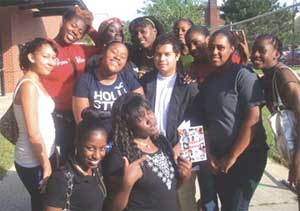
The free event is part of the Youth &
Community Writers Series organized by Books of Hope, a collaboration
between the Mystic Learning Center, a nonprofit affiliated with the
Mystic Housing Development in Somerville, and the Somerville Arts
Council.

For the past decade, Books of Hope has sought to help
urban teens achieve self-expression and advocacy through creative
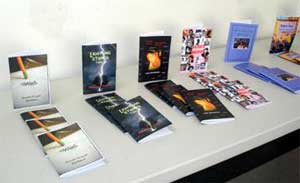
writing. The non-profit's writing workshops teach poetry, short story,
memoir, and non-fiction, and publishes books written by participants.
According to Florence Bergman, the director of the Mystic Learning
Center, Books of Hope has published over 125 young authors, who keep
all the proceeds from their book sales.

For further information about the event, contact Soul Brown at (617)640-0252.


Community

On February 18, 2009, in Latest News, by The Somerville Times

shelton_webBy William C. Shelton

In past columns, I’ve written about what an extraordinarily rich community Somervillians created and enjoyed in the first half of the Twentieth Century, and how it gradually disintegrated in the second half. Yet I don’t think I’ve ever clearly stated what I mean by “community.” It’s worth doing, because the word is used and misused to mean many different things.

Continue reading »


Old school Capuano speaks out

On February 18, 2009, in Uncategorized, by The News Staff
Congressman Capuano spoke out against banks that received bailout money.

By Jeremy F. van der Heiden

At
the House of Representatives in Washington last Wednesday, lawmakers
lined up the chief executives of the eight biggest banks in the country
for an old-fashioned tar and feathering. The executives were called
before the House Financial Services Committee to discuss with them
their dissatisfaction in the CEO's decisions in regards the spending of
billions of dollars in bailout money given to their banks by the
government.

The members of this panel of sorts included the
chief executives of Bank of America, Goldman Sachs, Citigroup, State
Street, Morgan Stanley, Bank of New York Mellon, Wells Fargo and Chase.
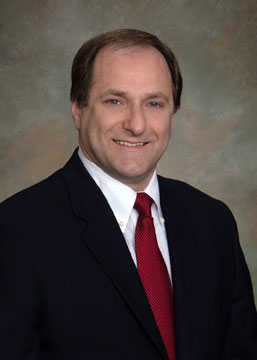
Probably the fiercest forayer of the day was Massachusetts' 8th
District's own Representative Michael Capuano. He was in classic form,
berating these executives with his allotted five minutes to speak.

First,
he asked how many of these executives engaged in dangerous, and
possibly illegal actions such as Credit Default Swaps, Collateralized
Debt Obligations, and Structured Investment Vehicles. Representative
Capuano asked, "How many of your banks had or currently have Special
Investment Vehicles, those off the books and somehow unregulated
subsidiaries of the bank or sister corporations?" To this, several
CEO's in front of him raised their hands to admit engaging in these
actions. Capuano answered back sharply, stating that, "So basically,
all or most of you engaged in all or at least some of the activities
that created this crisis in my opinion, because everyone of those
activities, especially the SIV's, to me, I think they're illegal."

He
went on to state "I can't believe no one has been prosecuted on this.
But then again, we haven't had any prosecutorial action whatsoever with
the last administration and the new administration has a little time to
figure this out, we'll find out whether anybody really cares."

Credit
Default Swaps, Collateralized Debt Obligations and Structured
Investment Vehicles are all forms of asset-backed securities – they are
intricate bank transactions that entail borrowing and lending to turn a
profit, one of the most basic functions of banks, but in this case the
risk is high because of the way they work. For example, Structured
Investment Vehicles work by borrowing money for a shorter period of
time at a low rate of interest, and lending money for a longer term at
a higher rate of interest. With the sparse amount of stability in both
major and minor companies today, this puts the parties capitalizing off
of these Special Investment Vehicles and those on the other end at risk
of taking major losses.

Representative Capuano continued on,
abashing the CEO's for the poor decisions they had made. Some of the
more quote-worthy statements included, "Basically, you come to us today
on your bicycles, after buying girl-scout cookies and helping out
Mother Theresa, telling us 'we're sorry, we didn't mean it, we won't do
it again, trust us.' Well, I have some people in my constituency who
actually robbed your banks that say the same thing…do you understand
that this is a little difficult for most of my constituents to take,
that you learned your lesson?"

In a classic Capuano style, the
statements reached a climax of intensity when the Representative began
to point and yell directly at the CEO's: "you created SIV's, you
created CDO's, you created Credit Default Swaps, you created the mess
we're in, and now you're saying you're sorry, trust us, we don't even
want the money. Interesting, no one has ever come to me telling me I
had to take billions of dollars."

He then expressed his
disappointment in the CEO's: "America doesn't trust you anymore…I
don't have one single penny in any of your banks, not one, because I
don't want my money going toward CDO's and Credit Default Swaps and
making huge bonuses…start loaning the money that we gave you, get it
on the street. And don't tell me we're not using that money for
bonuses, come on!"


The View From Prospect Hill

On February 18, 2009, in Uncategorized, by The News Staff


Dakota
Partners, aka Emerald Development, aka Austin Development, aka whatever
name they want to reinvent themselves as this year, is before the city
again tonight looking for yet another gift – this time an extension of
their construction permit for another year – only this time for a
laughable "hardship" variance. A hardship because, when you get through
all the language, the city essentially won't allow them to cut down a
tree – yes, you read that right – a tree.

They ask for a
"hardship" even after filing a lawsuit against the city, naming both
Mayor Curtatone and Alderwoman Gewirtz in it, stating that the city
illegally stopped them from proceeding by refusing to grant a permit to
remove a shade tree. That takes a lot of gumption – sue the city and
then ask for a gift – its called trying to strong arm a city by doing
whatever it takes to get what you want, and from what we hear it's not
the first time similar tactics have been used by this and/or other
developers.

Seven years of general craziness has swirled around
this specific location and this developer – and even though they won a
case that went before the State Supreme Court, why would anyone want to
continue in an area that abutters, neighbors, elected officials and
members of the local business community openly hate you and everything
you stand for?

In our opinion, it's simple – the almighty dollar
– that's why – it doesn't matter who says what, as long as they can
build. Of course, like any other animal backed into a corner, they will
continue to do and say whatever it takes to get what they want – they
supposedly have a mortgage on that property that would make your nose
bleed and have to be under pressure by the local bank that gave them
the money to do something, and soon.

Want to kill a couple of
hours – don't take our word for it – log onto the Registry of Deeds
online and try to follow the deed/paper trail and all the companies and
"investors" and mortgage holders related to this project and their
other projects – it makes for interesting reading, that's for sure. It
is enough to make your head spin, guaranteed.

It also wouldn't
be so bad if they hadn't left a bad taste in the community's mouth
after the last several projects they have done in this city either.
From what we hear, abutters, neighbors, Aldermen, local businesses,
contractors – pretty much anyone who has had to deal with them on any
level has had a less than pleasant experience.

We think it would
be much better if demo-man and his new friends from Charlestown or even
better yet, KSS Realty, were involved with this project instead of this
particular developer. In our opinion, this city doesn't need developers
like Dakota/Emerald anymore – even in this economy there are plenty of
people with plenty of money that won't step on and step over everyone
just to get their way.

For us, the only thing that would now
definitely prove to be the last straw is if the ZBA, under its current
less than intelligent leadership, grants this ridiculous "hardship"
extension.


Community

On February 18, 2009, in Uncategorized, by The News Staff


William C. Shelton

In
past columns, I've written about what an extraordinarily rich community
Somervillians created and enjoyed in the first half of the Twentieth
Century, and how it gradually disintegrated in the second half. Yet I
don't think I've ever clearly stated what I mean by "community." It's
worth doing, because the word is used and misused to mean many
different things.

Some use it to mean "place," although where
they live is often the only aspect that they share. Some refer to the
"immigrant community" or the "Italian-American community." Since
immigrants come from different countries speak different languages, and
observe different customs, it seems odd to me to think of them as
members of the same community. Presumably, this use of "community"
refers to whatever interests they share by being immigrants, or Italian
Americans, or whatever. Some, who feel solidarity with each other,
describe themselves as a "community." In this latter sense, "community"
is the third ideal of the French Revolution: Fraternity.

When I
have used the word in my columns, I mean a rich and interweaving
network of relationships in which people know each other and understand
that what they share is more important than their differences. In
community, these relationships-formal and informal-proliferate until
they create a place for everyone as whole individuals. Community's
members are known for who they are rather than what they are. Their
personal qualities are more important than their formal roles. In
community, there is room for as many leaders as there are useful things
to do, so there are leadership opportunities for all.

In
institutions, including those that provide social and human services,
relations are often hierarchical. In neighborhoods without community,
relationships are nonexistent. In communities, relationships are more
egalitarian. Because there is not an authority that defines the "right
way" and "wrong way" to do things, communities find creative solutions
to problems that institutions cannot.

They often do so quickly.
When an individual loses a job, a loved one, or their mind, they need
the immediate help and comfort that a community can provide. In its
absence, they endure the weary isolation that comes with applying for
food stamps, waiting for Social Security to decide, or being trapped
within a mental health system from which they may never emerge.

In
neighborhoods with community, we deal with each other as whole people.
n those without community, we deal with each other by accident. In
institutions, we deal with each other as roles.

In community, we are interdependent. To weaken one of us, weakens all.

Community
is the greatest security that a neighborhood can enjoy. When neighbors
know and trust each other, residential streets are not so much
anonymous public spaces belonging to no one, but familiar territory
that belongs to the neighborhood. Neighbors inquire when someone whom
they don't recognize is attempting to enter a neighbor's home. They
intervene when someone is being harassed on their street, friend or
stranger, because it is their street, and because they know that their
neighbors have their back.

The economic and cultural forces that
destroyed community in Somerville were largely beyond the community's
control. Factory closures eliminated thousands of jobs in the same town
in which workers lived. Suburbs held a powerful, but ultimately
illusive, lure. Steady erosion of hourly wages obligated women, who
were often the weavers of relationships, to enter the workforce,
whether they wanted to or not. The cars that got people to out-of-town
jobs, and the televisions that they watched to recover from working and
commuting, reduced opportunities for interaction. Gentrifications
brought thousands of professionals whose relationships revolve around
where they work rather than where they live.

It is impossible
for individuals or small groups to reverse the impact of such enormous
forces. But we can choose to recreate community in limited contexts,
like the few blocks surrounding where we live. We do this most
effectively by organizing shared actions around matters that are so
concerning that diverse neighbors are willing to take action, and that,
in order to make a difference, require cooperation among all who
participate.

If we create opportunities for specific and
achievable changes to make real our 80%-shared vision of a good
neighborhood, our diverse neighbors' focus is not on each other's
differences, but on how to accomplish shared objectives. In the process
of doing so, they develop relationships of trust and cooperation. They
come to see the situation through each other's eyes, understand each
other's differences, and appreciate those differences as assets rather
than liabilities. They create community.


Sciortino appointed to House Transportation Committee

On February 18, 2009, in Uncategorized, by The News Staff


State Rep Sciortino continues his work on the Joint Committee on Transportation.

By Keith Cheveralls

Last
Thursday, Somerville/Medford State Representative Carl Sciortino was
appointed to be the Vice Chairman of the Joint Committee on
Transportation in the state House of Representatives.

Sciortino,
a third-term representative and long-time public transportation
advocate, told The Somerville News that he will use his new position to
"help advocate for the needs of our community, as well as for
improvements in public transportation across the state."

Gaining
support for the proposed Green Line Extension, which would extend the
Green Line from Lechmere Station in Cambridge into Somerville and
Medford, is one of Sciortino's major goals.

"I have been a
strong supporter of the Green Line Extension since day one in office,"
Sciortino explained. "I was proud to be a part of getting the Governor
to commit the state's bond money towards the project, which we passed
in a transportation bond bill last spring."

"I will continue to
closely monitor the progress of the Green Line Extension, to do what I
can to ensure the funding needs of this project are met, and that the
project is delivered on time."

Sciortino also cited his belief in the need for increased reliability of MBTA buses and trains in Somerville.

"A
large portion of Somerville residents rely on the MBTA for their daily
commute to and from work. Every time a bus is late, or a train gets
taken out of service for mechanical reasons, we are reminded that the
T's finances are a mess. I will be using my role on the committee to
make sure a comprehensive transportation reform package includes the
needs of the MBTA."

The appointment, made by House Speaker
Robert DeLeo, comes as Sciortino begins his third term as a
Representative in the House. He was a member of the committee during
both of his previous terms.

"Carl has been a hard-working
legislator, and I know that he will continue to serve the Commonwealth
and his communities well in these posts," DeLeo explained. "I look
forward to working with him as we face the challenging issues
confronting us, such as transportation reform."

In addition to
his appointment to Vice Chair of the Transportation Committee,
Sciortino was appointed to the House Committee on Ways and Means and
the Joint Committee on Health Care Financing. The Committee on Ways and
Means handles the budget process for the House and reviews all
legislation that involves state finances. The Committee on Health Care
Financing crafted the state's health care reform legislation and
continues to address issues such as health care affordability and
access.


Old school Capuano speaks out

On February 18, 2009, in Uncategorized, by The News Staff

Congressman Capuano spoke out against banks that received bailout money.

By Jeremy F. van der Heiden

At
the House of Representatives in Washington last Wednesday, lawmakers
lined up the chief executives of the eight biggest banks in the country
for an old-fashioned tar and feathering. The executives were called
before the House Financial Services Committee to discuss with them
their dissatisfaction in the CEO's decisions in regards the spending of
billions of dollars in bailout money given to their banks by the
government.

The members of this panel of sorts included the
chief executives of Bank of America, Goldman Sachs, Citigroup, State
Street, Morgan Stanley, Bank of New York Mellon, Wells Fargo and Chase.
Probably the fiercest forayer of the day was Massachusetts' 8th
District's own Representative Michael Capuano. He was in classic form,
berating these executives with his allotted five minutes to speak.

First,
he asked how many of these executives engaged in dangerous, and
possibly illegal actions such as Credit Default Swaps, Collateralized
Debt Obligations, and Structured Investment Vehicles. Representative
Capuano asked, "How many of your banks had or currently have Special
Investment Vehicles, those off the books and somehow unregulated
subsidiaries of the bank or sister corporations?" To this, several
CEO's in front of him raised their hands to admit engaging in these
actions. Capuano answered back sharply, stating that, "So basically,
all or most of you engaged in all or at least some of the activities
that created this crisis in my opinion, because everyone of those
activities, especially the SIV's, to me, I think they're illegal."

He
went on to state "I can't believe no one has been prosecuted on this.
But then again, we haven't had any prosecutorial action whatsoever with
the last administration and the new administration has a little time to
figure this out, we'll find out whether anybody really cares."

Credit
Default Swaps, Collateralized Debt Obligations and Structured
Investment Vehicles are all forms of asset-backed securities – they are
intricate bank transactions that entail borrowing and lending to turn a
profit, one of the most basic functions of banks, but in this case the
risk is high because of the way they work. For example, Structured
Investment Vehicles work by borrowing money for a shorter period of
time at a low rate of interest, and lending money for a longer term at
a higher rate of interest. With the sparse amount of stability in both
major and minor companies today, this puts the parties capitalizing off
of these Special Investment Vehicles and those on the other end at risk
of taking major losses.

Representative Capuano continued on,
abashing the CEO's for the poor decisions they had made. Some of the
more quote-worthy statements included, "Basically, you come to us today
on your bicycles, after buying girl-scout cookies and helping out
Mother Theresa, telling us 'we're sorry, we didn't mean it, we won't do
it again, trust us.' Well, I have some people in my constituency who
actually robbed your banks that say the same thing…do you understand
that this is a little difficult for most of my constituents to take,
that you learned your lesson?"

In a classic Capuano style, the
statements reached a climax of intensity when the Representative began
to point and yell directly at the CEO's: "you created SIV's, you
created CDO's, you created Credit Default Swaps, you created the mess
we're in, and now you're saying you're sorry, trust us, we don't even
want the money. Interesting, no one has ever come to me telling me I
had to take billions of dollars."

He then expressed his
disappointment in the CEO's: "America doesn't trust you anymore…I
don't have one single penny in any of your banks, not one, because I
don't want my money going toward CDO's and Credit Default Swaps and
making huge bonuses…start loaning the money that we gave you, get it
on the street. And don't tell me we're not using that money for
bonuses, come on!"


Circus animals may no longer be welcome in Somerville

On February 18, 2009, in Uncategorized, by The News Staff


By Tom Nash

Following
concerns about the treatment of circus animals raised by a constituent
of Ward 1 Alderman Bill Roche, circuses with wild animals as a part of
their act may have to skip Somerville.

In explaining why she
joined Roche in asking the city solicitor to draft an ordinance to "ban
wild animals from being displayed in circuses," Ward 6 Alderman Rebekah
Gewirtz listed some of the abuses faced by circus elephants.

"In
Somerville, a place where we promote humanity and making sure we don't
have abuse, I think we should act on this as soon as possible," Gewirtz
said.

The order was approved at the Feb. 12 Board of Alderman
meeting. Revere, Quincy, Braintree, Weymouth and Provincetown have
passed similar laws banning circus animals.

The issue will be taken up by the Legislative Matters committee.


Golden Light’s extended hours approved

On February 18, 2009, in Uncategorized, by The News Staff


By Tom Nash

A
request by a Chinese food restaurant for extended hours passed without
comment at the Feb. 12 Board of Aldermen meeting, satisfying the
request of owner Bruce Lam without a repeat of the flared tempers the
issue elicited the first time the measure came to a vote.

The
Golden Light Restaurant, which has operated in Davis Square for 26
years, had long claimed to be open the latest in Somerville.
Alderman-at-Large Jack Connolly raised concerns about the restaurant
staying open past its hours in October, triggering a debate over
late-night establishments throughout the city.

"I'm looking at
the broad based ramifications," Connolly said prior to Thursday's vote.
"Do we want to be Allston/Brighton? We don't want to be the urban oasis
for the Western suburbs."

Connolly also cited complaints from
neighbors about the noise and loitering issues the Golden Light brought
by staying open past its allowed 1 a.m. closing time.

Ward 6
Alderman Rebekah Gewirtz has defended the restaurant during the
scrutiny from the board and its Committee on Licenses and Permits,
maintaining her constituents never complained about the restaurant.

Tensions
reached a high point at the Jan. 22 BOA meeting when Connolly invoked a
rule that allowed him to table the matter in the midst of a vote. No
objections were raised at the Feb. 12 meeting, and the measure passed
7-3, with Ward 1 Alderman Bill Roche and Ward 4 Alderman Walter Pero
joining Connolly in voting against the extended hours.