Pages
Stay In Touch
More
© 2026 The Somerville Times. All rights reserved.

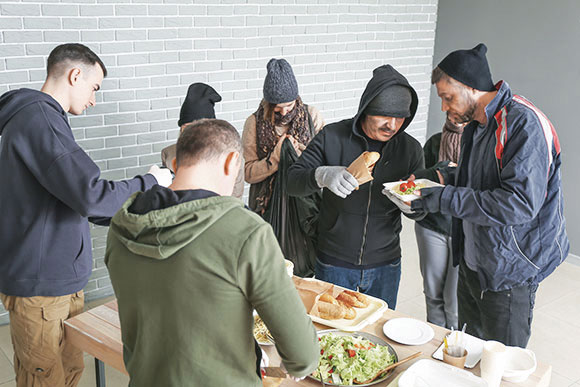
The Somerville Winter Warming Center is ready to serve the community during the 2026/2027 winter season.
By Harry Kane
For families or individuals experiencing homelessness, the warming center provides unhoused neighbors immediate safety, a warm place to sleep, and a bridge toward permanent housing.
The Somerville Winter Warming Center will open from December 7, 2026, to March 28, 2027, at the former Cummings School to provide accommodations for vulnerable neighbors.
“Nobody was turned away into the cold,” said William Fisher, Director of Emergency Management, commenting on the 2025/2026 season.
He presented an overview of the after-action report and improvement plan from last winter at the November 10 Public Health and Public Safety committee meeting.
The core focus is life-safety, explained Fisher. Clients receive a warm place to sleep at night, meals, bathrooms, basic supplies, transportation assistance, access to caseworkers, and referrals.
Last season, the center documented 6,227 overnight accommodations during 126 consecutive nights. The report indicates there was a 69 percent increase in documented overnight accommodations compared to the prior year. During the 2025/2026 season, the warming center housed a median average of 55 individuals per night and peaked at 67.
Demand last season “regularly exceeded the routine 45-cot configuration” with 70 percent of nights exceeding capacity, according to the report.
Fisher said that the team implemented corrective actions last season, such as increased usable space, more visible security, better interdepartmental coordination and multilingual staff.
For the 2026/2027 season, the city has hired a new security company that Fisher says is “genuine” and “caring,” and will engage with the community.
Fisher’s overview additionally brought up concerns from the community that had been expressed in regard to the suitability of the current location of the warming center, which is now located in a residential neighborhood at 42 Prescott Street.
At neighborhood meetings, community members raised concerns about “early line formation” that resulted in folks waiting outside for long periods of time, which he says may have resulted in increased noise at times.
Fisher explained that clients arrived early and waited outside in fear of not getting in the door. He hopes new protocols will help “mitigate those anxieties” for the unhoused population.
Other concerns included trash, smoking, concerns about comfort around playgrounds, communications from the city, public urination and defecation, and emergency vehicle activity.
Additionally, Fisher noted concerns brought up at community meetings related to emergency vehicles blocking residential driveways.
Operational improvements recommended include a new staging location, a portable restroom, additional seating, increased multimodal transportation options, maintaining multilingual staffing, consistent communication with the public, increased cleaning procedures, coordinated assistance with partners, and preparedness for extreme temperatures.
Fisher ended his presentation by emphasizing the importance of addressing behavioral issues with homeless clients instead of casting aspersions or making assumptions about groups of people.
“The large majority of the people that go to this warming center and other warming centers are really good, well-behaved folks that are just in a bad spot,” said Fisher. But he added, there are always a handful of people who are “up to no good.”
Following the presentation, City Council Vice President Wilfred Mbah expressed his gratitude for the coordinated effort to examine data and translate those findings into meaningful improvements before the winter season.
Mbah brought attention to the harassment cases reported by pedestrians and abutters in the area surrounding the warming center and said public safety, outreach, health support, and neighborhood coordination will address these types of concerns before they escalate.
“It’s just important that we distinguish between individuals simply accessing services and specific behaviors that may constitute harassment,” said Mbah.
The City Council approved a transfer of $92,795 on November 12 from the Emergency Response Stabilization Fund to the Health & Human Services Administration Special Items Account to support the operation of this season’s warming center.
Health and Human Services Director Karin Carroll explained that a $410,037 grant, with no new match required, from the Executive Office of Housing and Livable Communities, will pay for 10 of the 16 weeks of operation for the 2026/2027 Winter Warming Center.
Public Information Officer Victoria MacGregor confirmed that Housing Families – a nonprofit organization that supports families and individuals facing homelessness or housing instability – will operate the warming center this winter.
The following funding will also support the Warming Center this season: