Pages
Stay In Touch
More
© 2026 The Somerville Times. All rights reserved.

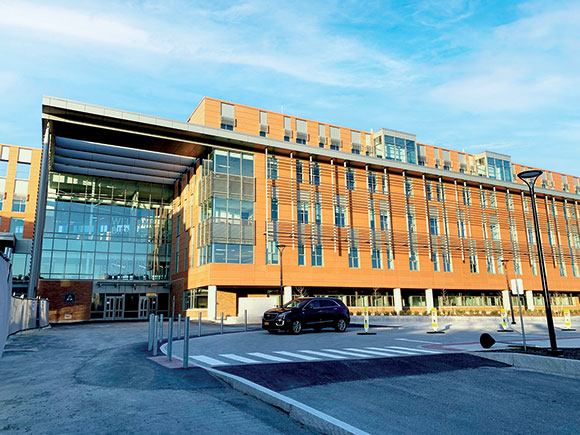
Somerville High School has been selected as a partner school of the Massachusetts Biotechnology Education Foundation (MassBioEd), bringing a $25,000 grant to Somerville Public Schools to expand biotechnology and life sciences education.
The grant is supported through a statewide STEM initiative funded by the Massachusetts Life Sciences Center (MLSC) and awarded to MassBioEd to strengthen life sciences education and workforce development in public schools across Massachusetts.
Through MassBioEd’s ACCESS Program, teachers, administrators, and scientists work together to provide vertically aligned, hands-on life science lessons and career experiences for students in Grades 6–10. As part of the three-year program, Somerville High School life sciences educators will participate in workshops focused on ACCESS lessons and equipment, as well as in-school or remote coaching and mentoring to incorporate these experiences into their existing curriculum.
Students will benefit from new laboratory equipment, tools, and opportunities to engage with current biotechnology practices and real-world applications. MassBioEd scientists will also work alongside SHS educators and students throughout the 2026–2027 school year, helping students build technical skills and explore careers in the life sciences.
“This partnership gives our students an exciting opportunity to connect what they are learning in the classroom to the rapidly growing field of biotechnology and life sciences,” said Superintendent Dr. Rubén Carmona. “Investing in our educators and providing students with authentic, hands-on experiences is an important part of preparing them for college, careers, and continued learning.”
Six Somerville High School educators are participating in the program.
“We are grateful to MassBioEd and the Massachusetts Life Sciences Center for this investment in Somerville High School,” said Marianna Zimbardo Hosking, Science Department Head at SHS. “Our teachers are excited to incorporate new tools and biotechnology experiences into our 9th Grade Biology and AP Biology courses, and give students opportunities to learn by doing.”