
Pages
Stay In Touch
More
© 2026 The Somerville Times. All rights reserved.


By Dennis Fischman
To most young children, it comes as a shock to learn that before they were born, their parents had a life of their own. Once they realize it, some try as hard as they can to ignore it. Others start looking at their parents’ friends, brothers and sisters in a different way, and from overheard conversations or actual storytelling, they try to piece together the past.
In How to Solve Your Own Murder, Annie Adams, a young American woman, knows a little about her mother and nothing about her father. Then a great-aunt, Frances, whom she has hardly heard of, calls her to England for an important conversation. When Annie shows up at her estate, however, Frances is dead—fulfilling a fortuneteller’s prediction from long ago that she would one day be murdered.
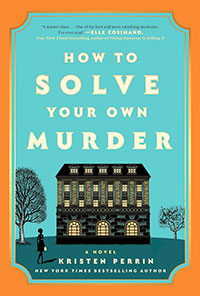
“How to Solve Your Own Murder” by Kristen Perrin
Dutton, 2024.
Annie sets about to solve the murder, not only because that’s a condition for her inheriting the estate but because she feels a kinship with her late relative that transcends the decades and continents. But Frances’ later life (Annie finds) was consumed with gathering information about all the people around her in the village of Castle Knoll. In collecting their secrets, did Frances provoke the murder she feared?
What I liked about the book was, first, our hero. Annie Adams rang true to me and was endearing. She was neither impossibly sweet nor totally unselfish: she certainly wanted the house for her mother and the inheritance for herself, but also, to make sure the locals weren’t displaced by a for-profit developer. That’s a mix of motives that seem genuine. Her own skills as a mystery writer did not make her a super-sleuth: just a person who could (with a little help from her friends) ask the right questions, at least eventually.
I also liked the way Kristen Perrin included many of the tropes of the cozy mystery but combined them in an unusual way. The young woman is called to a small town for family reasons, only to discover a murder, and have to solve it; the people and relationships there that everyone else knows but she has to find out; the secrets of a previous generation coming to light; the policeman as a romantic interest; the best female friend; the question of who is actually descended from whom and how. Add to that a challenge worthy of The Westing Game, and you have a plot that engaged me all the way through.
Sadly, I did not think much of the murder victim, Great Aunt Frances Adams. I did not see why her girlfriends envied her and tried to imitate her in their teens, and I could not really sympathize with her superstitious belief in a fortuneteller’s prophecy. It seems to me that she did not make much out of her life. She should have married John. But then, this story could never have happened!

















Reader Comments