
Pages
Stay In Touch
More
© 2026 The Somerville Times. All rights reserved.

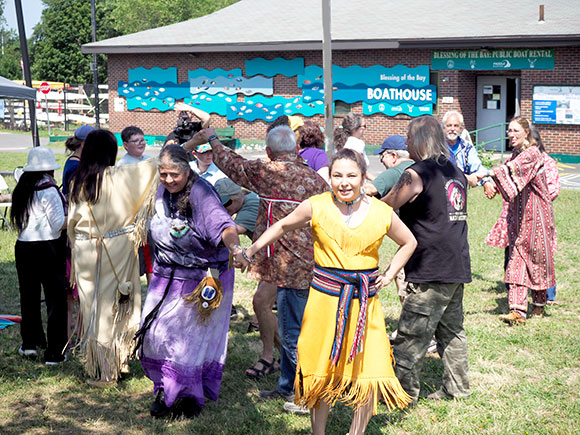
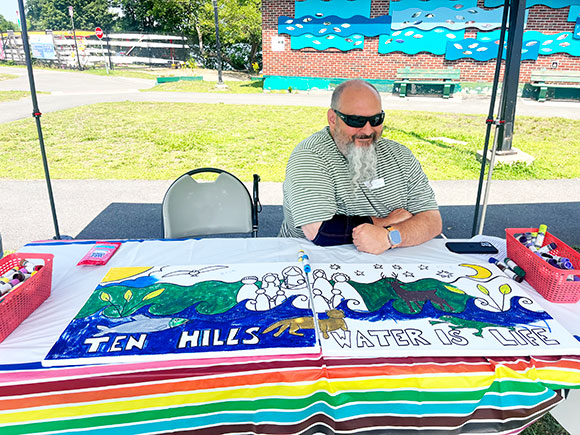
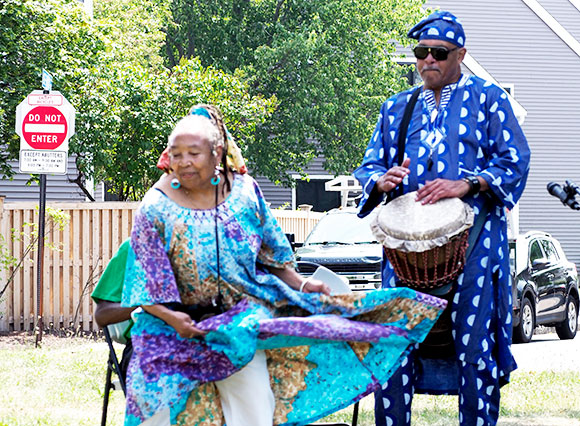
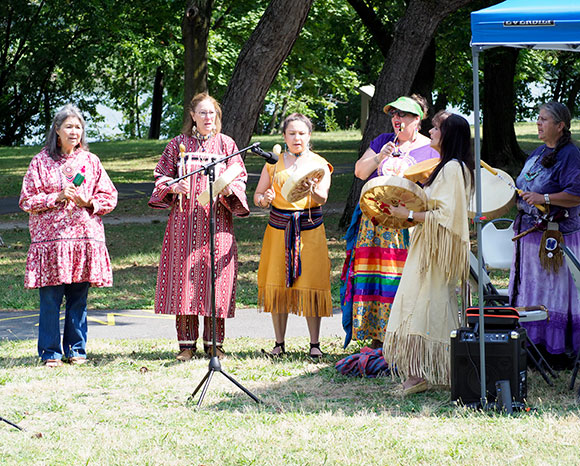
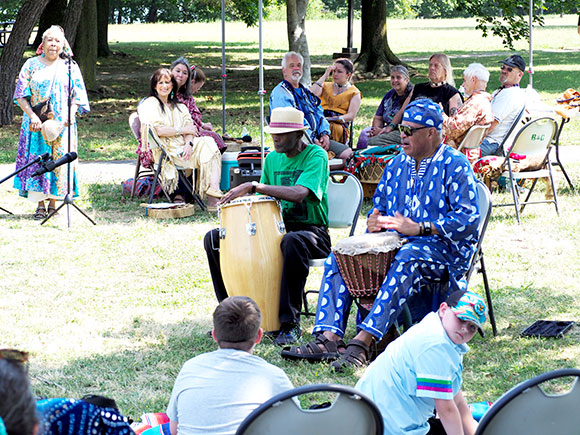
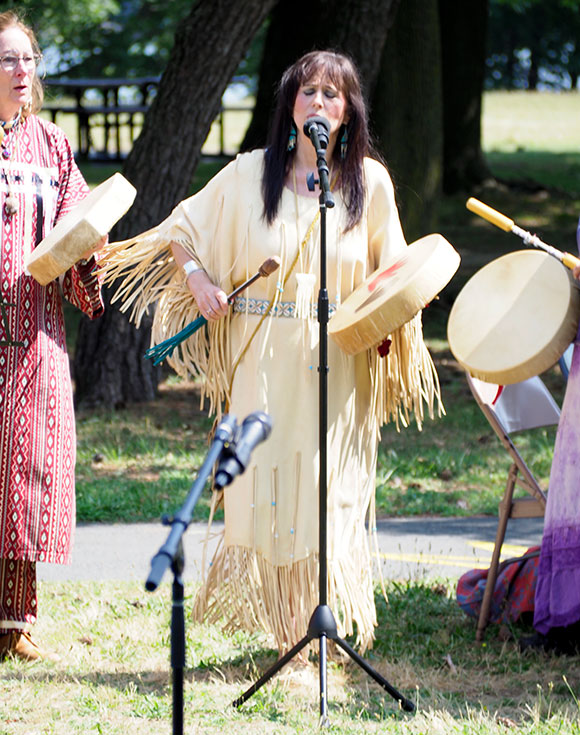
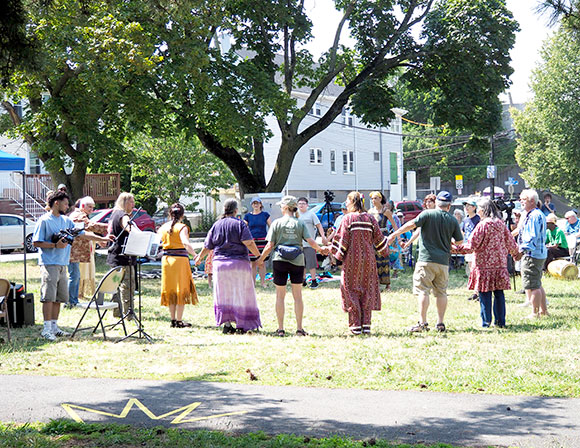
Indigenous, Black, and colonial narratives highlighted the Blessing of the Bay: Three Voices, One Shore event held this past weekend. — Photos courtesy of Yuris Mangolds
By The Times Staff
Blessing of the Bay: Three Voices, One Shore, the newest installment in Somerville Museum’s History in the Park series, offered a powerful and multivocal reflection on the area historically known as Ten Hills Farm last Saturday. Held on the banks of the Mystic River, the event brought together Indigenous, Black, and colonial narratives to reframe the city’s oldest settlement.
Since being contracted by the City of Somerville to produce public history programs formerly run by the city, the Museum has been expanding these events to include a richer range of perspectives. Blessing of the Bay joins a lineup of site-specific programs, including a commemoration of the Powder Alarm at the Old Powder House, The First Flag Raising at Prospect Hill, Paul Revere’s Ride at Foss Park, and Ghosts of Somerville at Milk Row Cemetery.
“This event was the first of its kind, making it both exciting and challenging to plan. I am proud of the outcome,” said Anna-Celestrya Carr, Historic Events Manager of the Somerville Museum.
At Blessing of the Bay, audiences experienced a dynamic mix of storytelling, song, and dance that honored the complexity of the past and the resilience of the communities that shaped it.
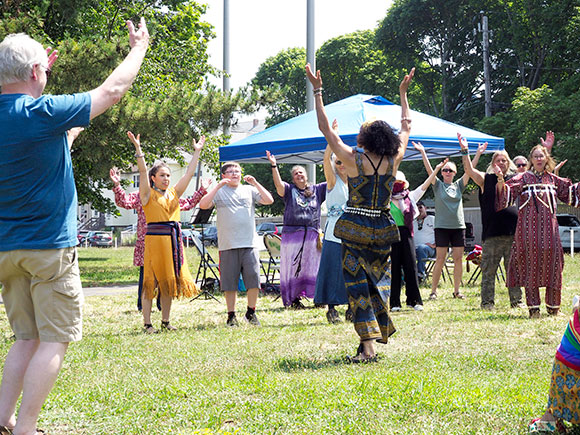
Performed by Aimee Ledwell, Indigenous Storyteller, the United Native Cultural Center, Morningstar Singers, De Ama Battle’s Art of Black Dance and Music, and Anna-Celestrya Carr, the event centered often-overlooked histories of Indigenous and African descended people who inhabited this area.
The event took its name from the Blessing of the Bay, the second seafaring vessel built in colonial America and the first in New England-commissioned by Governor John Winthrop in 1631, while highlighting additional narratives often left untold.
The performance presented Winthrop’s legacy as also tied to the codification of slavery in the North and his eventual enslavement of both Indigenous and African people, a practice which continued through subsequent generations of owners at Ten Hills Farm.
The performance also acknowledged the legacy of the Indigenous leader Sachem of Mistick, whose diplomatic decisions under colonial pressure reflected strength and survival. More about this history can be learned at the History on the Line exhibition at the Somerville Museum.
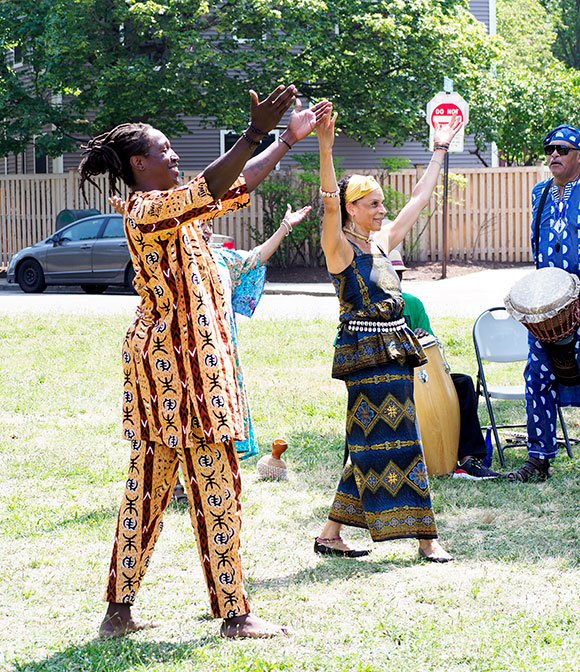
Stephanie Marlin-Curiel, Executive Director of the Somerville Museum, reflected on the event’s emotional and communal power: “Today’s event felt like a reclamation of history and of place while opening a space of welcome to all. By inviting the audience to join in singing and dancing, and with the beat of the drum resonating in our ears, we were one, while acknowledging our separate but intertwined histories.”
Through music, traditional dances, land acknowledgements, and a striking metaphor involving a “borrowed” water bottle, the program called on attendees to reflect not just on the past, but on the strength and survival of the Indigenous and Black communities and the work left to be done today. While these truths are difficult, the Blessing of the Bay event allowed space for grief, connection, and celebration.
“Sharing my cultural traditions through song and dance with the Somerville community was a meaningful experience for me. I look forward to planning this event again next year; it will only improve and grow. I hope to see everyone at our upcoming History in the Park events or Drop-In Chats,” said Carr, who is also a professional indigenous dancer and member of the Morningstar Singers.
Blessing of the Bay was made possible through the support of the City of Somerville’s Department of Racial and Social Justice, Department of Public Works, and the Massachusetts Office of Travel and Tourism.

















Reader Comments